Showing posts with label energy. Show all posts

Tuesday, September 23, 2014

A Bigger, Better Canada Appendix I: Details and Maps [MUt3.1]

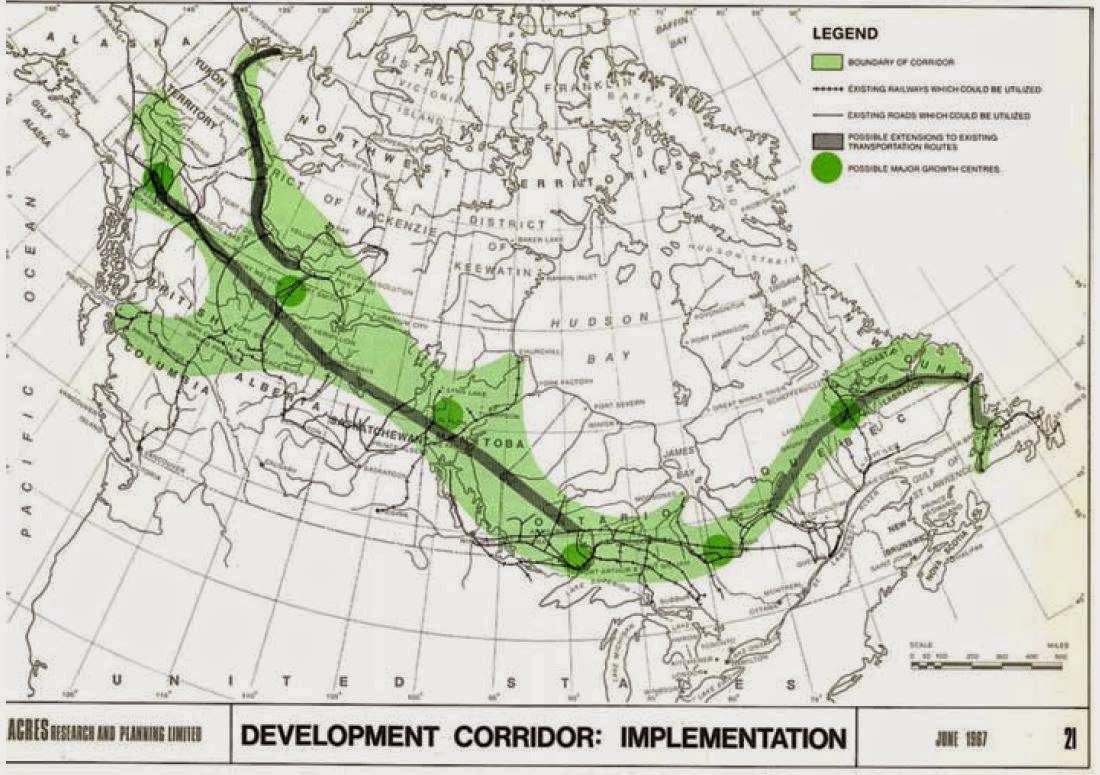
Proposed larger settlements (green circles) and infrastructure extensions (black lines) in the larger Development Corridor.

So,

When I was in secondary school, I looked around at the global economic powerhouses and noticed a trend.  The ones I identified were the United States, the former Union of Soviet Socialist Republics and China.  I noticed that they were big countries, and had something that Canada did not: population density.  I hypothesized in my young mind that certainly Europe could become a larger global player if they formed some sort of economic union, and felt vindicated when I later discovered that the European Union was indeed a thing, though it had been conceived long before I had any such idea.  So I thought to myself that certainly Canada could become a larger economic power if her more northern climes were developed.  How?  My thought process was that, if a temporary tax-free zone were established, surely private industry would step in and establish the necessities.  It was awfully short on details, but in fairness I think I was 16 when I had this idea.

Naturally, when I found out about the concept of the Mid-Canada Corridor, I was quite excited despite having had the idea several decades too late.  This is the reason I was so disappointed after writing my last post.  There was so much more detail that I wanted to share, but I couldn't decide on how to present the information to you fine be-monocled, top hat wearing readers and still maintain some semblance of flow.  I had, in my opinion, given a hand-waving argument about available resources and given no specific detail on how it would be accomplished (not unlike my 16 year old self's argument).  Luckily, the authors of "Mid-Canada Development Corridor ... a concept" had given this thought and drawn many a pretty map.  Here, I shall share with you some maps and thoughts I didn't want to include in the last post.  It may look like a long post, but at this point in its composition, I assume it will be graphic-heavy and very a very readable length.


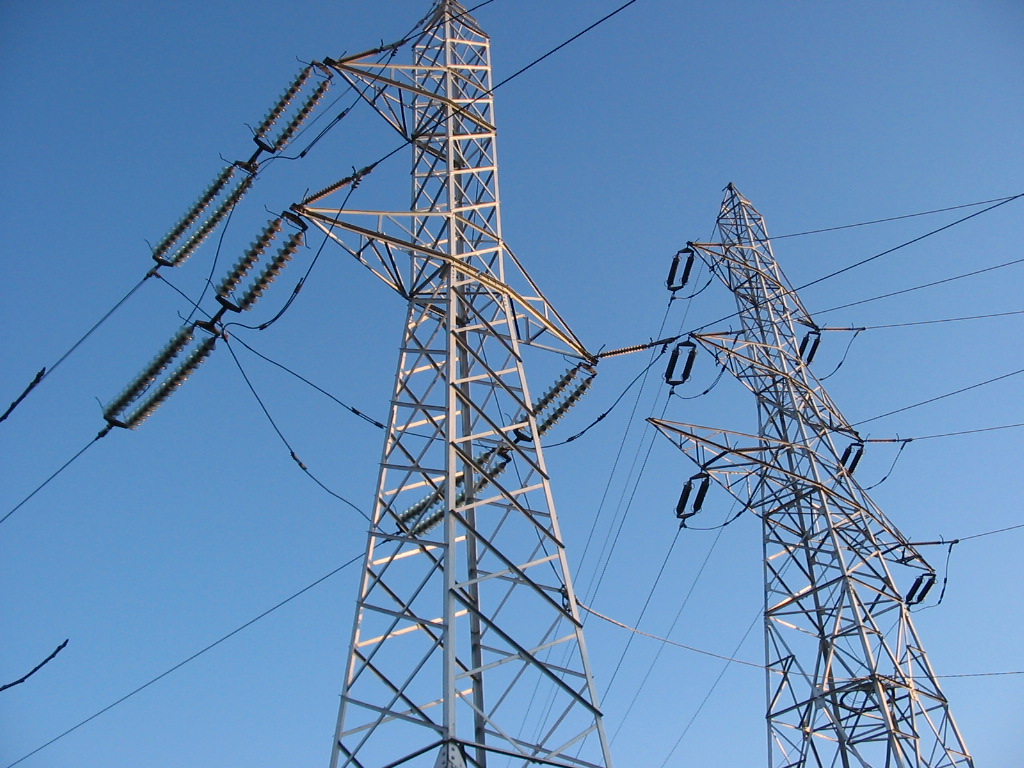
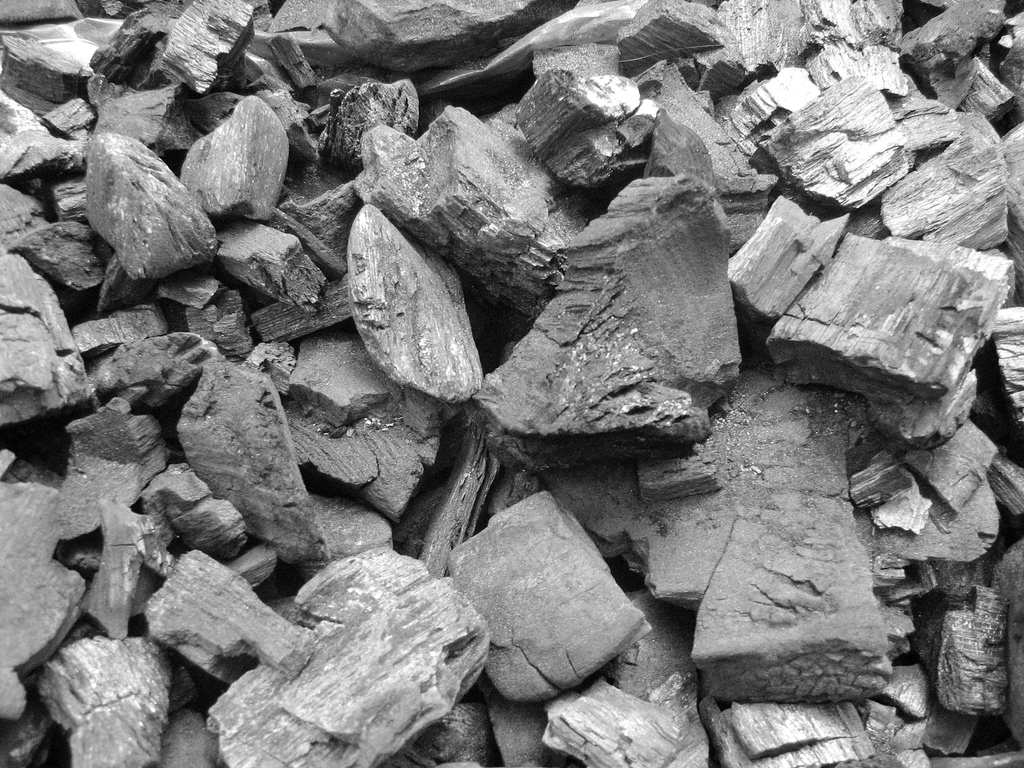
The two maps above are the economic impetus for the development of the corridor outlined at the top of this post.  You will notice that the mineral- and fuel-bearing rocks are quite complimentary.  I have heard how resource rich Canada is, but I had no idea that this was the extent of it.  Each of those minerals and fuels are economically important in their own way, and the exploitation of each would certainly bring wealth and prosperity to the region as well as the entirety of Canada. These two maps I view as the reason to establish the Corridor, or at least the economic reason.  Below, I feel the method of development may be established.
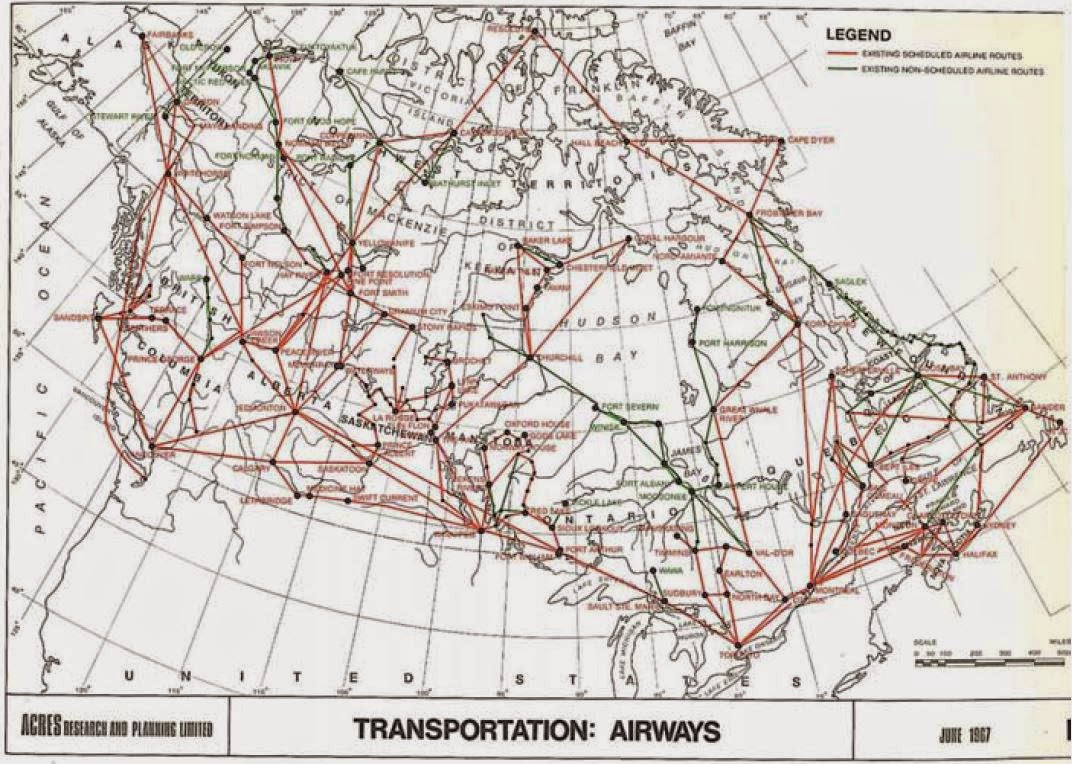


The road coverage as of 1967 certainly leaves something to be desired, but the rail networks seem to offer reasonable coverage of the Corridor, albeit mostly with single track.  Air transportation has excellent coverage of the Corridor and would be an ideal way to ferry people quickly.  With this ability to move people via air and freight by rail (and as I've previously stated, rail is great for freight), it seems reasonable to assume that settlement could be established easily enough.  It is also interesting to note that the Lakehead-produced report suggested use of cargo hovercraft to deal with over-land transport of lighter goods where there are no roads or railways, which is wonderful in all sorts of ways.

Easily one of my favourite written sections from the book.
That said, I feel that the aluminum airship (established with a large R&D contribution from the US government) could play a pivotal role in the development of the Corridor.  Recent articles from Gizmodo and the crew at Stuff You Should Know have touched on airships.  The article from Gizmodo discusses the development of an aluminum-based rigid airship which requires no runways and is capable of carrying 66 tons.  The SYSK podcast linked above discusses the ludicrous fuel efficiency of airships, capable of  crossing an appreciable fraction of the Earth's circumference with the same fuel it takes for a fixed wing aircraft to simply reach cruising altitude.  And, while we're here, welcome to Vodka & Equations!  It's the blog that scoffs at cargo hovercrafts while heaping praise upon modern-day dirigibles.


The last thing that would help development of the Corridor immensely is water.  Primarily, water is kinda, sorta necessary for human life.  One of those limiting factors when you're considering human settlement.  You will notice that the proposed corridor should have plentiful water resources, and should do nicely for providing drinking water so long as we don't treat it like Lake Erie.  I will also take this opportunity to draw your attention to the undeveloped hydroelectricity potential.  In keeping with the theme of things I've proposed which have, in fact, been discussed decades previous, it would appear that I was right in suggesting that Ontario should have potential hydro projects near James Bay should they prove necessary.  As previously noted in this blog, hydro power delivers phenomenal energy return on energy invested (roughly 100:1 according to whatever source I was reading).  Québec and other places uses such large energy sources to run aluminum smelters because of the incredibly intense energy demand because it is plentiful, reliable, and comparatively inexpensive.  It is terribly convenient that metal ores can only be smelted near hydroelectricity sources, and we happen to have both those things right there.

Another issue I'd like to briefly touch on is that of the native reserves in Northern Canada.  This is a wild guess on my part, but I feel as though part of the problem with the delivery of services, and thus the low quality of life, to many reserves is the fact that they are so far away from the major urban centers.  Perhaps if the Corridor were developed they would have an easier time getting social services and our reserves wouldn't be so horrific?

The picture at the top of this post indicates with green circles smaller established areas which could be dramatically expanded to serve further settlement, and I will briefly [with tongue firmly planted in cheek]  point out that it is awfully self-serving for a Lakehead publication to suggest Thunder Bay as a region of dramatic expansion.  The thick black line indicates possible extensions to existing infrastructure.  It also features existing usable road and railway, but I sincerely doubt that it is possible to pick out such small details.  Hopefully with these details outlined, my previous post will seem more feasible, at least economically speaking.  There's a lot of potential up there, we just have to seize the opportunity.

Oh, and I'm sure some switchgrass plantations wouldn't go amiss.  Those are great for all kinds of things.

NM

Monday, August 25, 2014

Energy policy proposals; numbers are hard. [EBP5]

Spillway from the Robert-Bourassa Generating Station in Québec.  Source.

So,

I don't know if any of you will remember this, but I sure do.  During the last Ontario election, I [perhaps mistakenly] recall hearing a lot of politicians calling for Ontario to shutter its nuclear plants due to cost and safety concerns in favour of importing excess energy from our neighbours.  Not only that, but The Star ran an opinion piece echoing what I had heard a lot: rather than expanding and upkeeping Ontario's nuclear generation capacity, we should simply shutter them and import low-cost hydroelectricity from Manitoba and Québec.

Now, on its surface this appears to be a reasonable proposal.  My intelligent, attractive, monocle- and top hat- clad readers will no doubt remember my praise of hydroelectric power based on the energy returned on energy invested.  As a result, the energy is indeed cheap comparatively speaking.  Further, our Francophone friends are exporting a lot of power to New England for less than we pay to generate nuclear power.  There is, however, one problem with this scheme.  There's not enough.

Source, retrieved 2014-08-25-21:30

At any given moment Ontario's nuclear plants, with some of the highest capacity in the world, are generating about 10 GW of power.  That's gigawatts.  To quote the great Rick Mercer, that's alotta poutine.  That's also GW, not GWh.  The -h suffix means "hours" and refers to the amount of energy that has been produced in one hour.  Your energy bill is usually on the order of kWh to refer to the amount of energy that has been used in a few months.  So Ontario is outputting that amount of nuclear power almost constantly, every hour of every day.  That amounts to around half of Ontario's generating capacity, but it will frequently represent a larger fraction of the actual generated energy because of the variable nature of hydro, wind and gas plants.  At the moment shown above, it is sitting at 57% of generated energy, though this is an off-peak hour.

If we look to another Wikipedia page, we can see that the sum total of Québec's energy exports in 2011 amounted to 26,763 GWh.  Based on quick, dirty, back-of-the-envelope calculations, if we took all of that energy at a rate of 10 GW, it would only replace Ontario's nuclear reactors for 112 days.  That's not even a third of a year.  I suppose rough approximations would indicate that that means it's only exporting about 3 GW of power at any given time.  This also assumes that you could convince our neighbour to stop exporting to New England altogether and allowing Ontario to be the exclusive purchaser.

So Québec does not generate enough hydroelectricity to replace Ontario's nuclear reactors.  "But wait!" you shout, slamming your fist on your desk, or perhaps grasping at your forehead, "Manitoba!  Surely Manitoba could help!"  Well, perhaps that's true.  I'll admit, before checking the numbers I was not optimistic, Manitoba not being known for heavy industry or other energy-intensive applications.  As it turns out, my doubts were well-founded.  Manitoba's current hydroelectric capacity is on the order of Québec's exports, as near as this page would suggest.  In 2012, Manitoba's hydroelectric generating capacity was 5485 MW, or just over 5 GW.  In fairness, Manitoba has no need to produce a lot more power unless they want to export, as it would appear that they are meeting over 90% of its demand with hydro alone.

So that we're clear, if Québec diverted all of its energy exports to Ontario, and Manitoba diverted the entirety of its hydroelectricity to Ontario, it still would not be enough to replace Ontario's nuclear generating capacity.  And, while I've got you, I should note that a lot of the drive behind hydroelectric development is from environmentally-conscious types.  It should be noted that all types of energy have an impact, and [as friend-of-the-blog Jeff P. pointed out to me] hydro is no exception.  A reservoir usually needs to be flooded when a dam is installed, which leaches water-soluble chemicals into the water, at least temporarily throwing the local ecosystem out of whack and potentially killing its inhabitants en masse, or negating its usefulness for things like irrigation.  And that's just the nutrients.  The American eel is, conservatively speaking, near-extinct in the St. Lawrence and Ottawa Rivers because they have been turned into pink slime by turbines.

Not nearly as cute as it is threatened.  Source.


Manitoba, as it turns out, is also planning a large number of developments along the Nelson River, which could double its generating capacity in the future.  This is not unlike how Québec wound up with such a large generating capacity, in the 1960s and 1970s they built several large hydroelectric generating stations near James Bay (just off Hudson's Bay, into which the Nelson River drains).  It would appear then, that if Ontario truly wants to replace its [big, scary] nuclear generating capacity with hydroelectricity, more needs to be developed within Ontario.  The problem with that is that, as I understand it, all the commercially viable hydroelectric sites in southern Ontario are already developed.  To generate enough to replace its nukes, Ontario might in fact have to turn to the Arctic watershed as Manitoba and Québec have done, Ontario also having access to James and Hudson's Bays.  It would take a lot of transmission lines to get the power from the North to its southern markets, but that is the nature of these things.  Ontario needs to decide as a province whether it wants to continue with nuclear power or develop cheap hydroelectric capacity where possible.

It would likely take decades of investment, like in Québec, but could potentially be worth it with the promise of cheap power in an industry-heavy province currently struggling with high energy prices.  Sure would have made a nice post-2008 Keynesian* stimulus project.

NM

* Keynes proposed that stimulus projects should focus on public infrastructure because even if the spending failed to stimulate the economy as hoped, at the very least you'd be left with things you needed anyway.

Tuesday, July 1, 2014

Grains, Rails, and Regulations.

British Columbia agreed to join confederation if it would be provided rail access to the East.  They would be the last province to join Canada until Newfoundland figured out they were missing out on a great time.
So,

I have wanted to write about trains for a while, so expect this to be a long and rambling post fueled in equal parts by coffee, home brewed beer, excitement for Canada's 147th birthday, and Oxford commas.  A nation as large and diverse as Canada presents a special challenge for finding unifying themes that do not involve federal policy or apologising.  So I choose today to write about a technology that has unified our great nested nations, rail.

I can only imagine that you, dear readers, wearing your special Canada Day (or vintage Dominion Day) top hats and monocles, are wondering whether rail really is important in our present day.  I can tell you that for a great deal of people, it most assuredly is.  Ignoring the obvious arguments regarding the jobs involved in rail, many rural Canadians were supremely irked by rail service in the spring of 2014.  Many CBC Radio One listeners might remember the call in shows, or perhaps you spent time in a rural coffee shop (i.e. Tim Horton's.  Yes, I mean i.e. and not e.g.), around that time, and you listened to the exclamations that the railroads and/or Government hates farmers.  Last year, the prairie provinces had a wet summer that led to higher-than-average grain crops when a record harvest was already anticipated.  It ended up exceeding expectations by a third (which, in this case, represents excess millions of tonnes of grain).  It appears that from reviewing the relevant news coverage, when the harvest came in for the fall of 2013, there was so much grain that farmers waited for prices to go up before selling to the elevators.  What followed was what has been termed a "rough winter."  During inclement weather, railroad operators operate at 70% capacity to ensure that adequate braking can be provided by the locomotives on potentially icy rails, meaning that the shipment of grain was slowed even further.  Come spring, elevators collectively faced with teragrams of grain began to panic ever so slightly.

It was at this point that the Federal government decided to step in.  For better or worse, an Order-in-Council was passed requiring both CP and CN railways to ship 5000 cars worth of grain each per week or face $100,000/day fines, along with temporarily loosened regulations to allow more freedom to transport grain.  Coincidentally, this is almost exactly the same excess capacity that the rail companies had in the fall of 2013 before the harsh winter set in.  The CEOs of the respective companies warned of bottlenecks when the grain arrived to port.  I have not seen coverage of what ultimately happened, but the takeaway message here is that even today railways can evoke very strong feelings.

The view from the apartment in Calgary, looks like coal headed East.  It's interesting to note that I moved to an apartment a five minute walk from a CP Rail line.
Adjusting your monocle, I imagine you, most attractive and intelligent reader, are wondering why rail is such a big deal, why on Earth it would evoke such strong emotions.  The reason is simple: trains are ridiculously efficient.  There is simply no more efficient method of transporting freight over land than with trains.  For this reason, 11000 km of rail are currently re-creating the Silk Route in order to create a trade link between China and Germany.  Why?  When an entire train is considered, one liter of fuel will carry one ton of stuff for 185 km.  There is simply no better way of moving masses of stuff over land than by rail.  This is, of course, why grain farmers in Canada get so upset when they cannot ship by rail.  Without that efficiency, it would not be worth transporting.  In an interesting note, the method by which this fuel economy is achieved is fascinating.  In the case of CP rail anyway, a traction diesel-electric hybrid is often employed.  In this method, a diesel engine is operated at its optimal rpm, this energy is converted to electricity and is used to run an electric motor at very high efficiencies.  It's similar to the shockwave engine that MIT thinks will revolutionise passenger vehicles by exploiting high-efficiency combustion engine operation coupled to already efficient electric motors.

Naturally, low transportation costs mean that a variety of valuable goods will be shipped via rail.  Especially when commodity prices are high and no other viable methods of transportation exist, rail freight will be considered as a transportation option.  This is why oil transportation by rail has skyrocketed in Canada in recent years.  Whereas pipelines are facing stiff opposition from environmentalists and the politicians who represent them, oil companies can profitably ship their product by rail if necessary.  Being in the [strong and] free society that we are, it is the right of the company to operate this way.  And, considering that publicly traded companies have a legal obligation to maximise profits, they will.  Despite accusations from grain farmers that rail companies only care about oil and not farmers, it becomes an economic necessity to ship oil by rail where no other options are available.

As a result of the high price of oil, increased production/shipment, and deregulation, things will go wrong.  The disaster at Lac-Mégantic, in my opinion, is a prime example of why deregulation doesn't work.  When companies are allowed to police themselves, and they are also required to maximise profits, it creates a conflict of interest and independent review is crucial to safe operation for the benefit of both the operators and the citizenry.  It's also important to remember that Canadian pipelines are a comparatively (to different shipment methods and the pipelines of other countries), safe mode of oil transportation.  The demand for oil is not decreasing, and companies will ship a valuable product by any means necessary.

So, trains, eh?  When the Pacific and Atlantic Oceans were bridged in Canada in 1885, I'm not even sure what the primary shipments would have been, though lumber, grain and coal seem likely candidates.  It was the promise of a rail link that brought British Columbia to Confederation, and the railways helped build the country.  Today they continue operating, linking manufacturers, farmers, and their ilk to port cities and international markets.  Ontario currently has plans to establish a rail link to the Ring of Fire so that mines may be opened and the region developed economically.  And, given the efficiency of the mode, rail will continue to be an integral part of Canada's sustainable development.

NM

P.S.  Now if only we could get trains to run on syngas or methanol...

Sunday, October 20, 2013

The Impressions of a Calgarian Summer

Onward!

So,

I haven't written anything in about half a year.  Or, rather, I haven't published anything in about half a year.  Can you even believe my nerve?  But I digress.  As ~98% of my readers will no doubt already know, I spent the summer in Calgary teaching children how to bike, meeting fantastic people, and generally exploring a region of Canada which I had never previously experienced.  In the true spirit of science and discovery, I feel it necessary to divide this post into headings, and perhaps sub-headings.

A [Surprisingly] Progressive Attitude:

It's kinda solar-power, just a really, really old kind.
The image of a prairie pumpjack might not be the best picture to start this heading, but hear me out.  It is my understanding that this image has become more or less commonplace since the discovery of large oil deposits in Alberta.  It's important though, because my understanding is that this energy production has given way to...

Source.

That's right.  There are now large wind farms coexisting with conventional farms all across Alberta, and it's my understanding that the province leads all of Canada in wind energy production.  This was one of the first instances in which Alberta surprised me.  In my home [and supposedly progressive] province of Ontario can't put up more than one windmill at a time without drawing the ire of baby boomers who are convinced that human civilization peaked between 1955 and 1965 and all subsequent change is an affront to God and Country.  Rural Albertans have recognized that wind energy is a great way to make some extra money, so they do it.  They don't complain about the view being ruined.  They don't invoke the most bizarre example of equivocation I have ever seen and say Alberta is "naturally green without windmills."  They just recognize a good idea, and they do it.

Speaking of good ideas...

Another good idea?  Bike lanes.  Lots of 'em.  Calgary currently has 960km of bike lanes, ~350 of which are on-street.  And, as with other bigger Canadian cities like Ottawa or Toronto, I feel safe riding my bike on the roads because drivers are familiar with the relevant laws and are acclimated to the presence of bicycles.  Again, this is in stark contrast to my home town, where being off-sidewalk is the worst kind of nuisance.  Further, I didn't even realise what a good idea segregated multi-use trails would be until I came to Calgary.  I just assumed I would always be slowed by joggers and walkers alike, but Calgary recognized a good idea, and then they did it.  They also have "park and ride" lots near the trails, so you can drive part way into the City, then use the trails to get into the downtown core without paying for parking or dealing with congestion.

I don't believe those bike lanes are fluke, either.  From talking with people, Mayor Nenshi is to be credited with a lot of related successes.  Downtown traffic congestion has been at least partially alleviated by an extensive cycling network, but also free C-Train [light rail] service in the downtown core.  I don't know that I would ever expect similar things happening in Ontario do to anti-change protests, but I'm sure glad to see that they can happen somewhere.  The City appears to take its motto rather seriously.

Come Hell or High Water:

Source.

For those unfamiliar with prairie geography, it's pretty flat.  Also, rivers run through that flat land.  The result of this is flood plains, regions in which even the tiniest increase in flow will represent a very large flooding footprint.  As it happens, Calgary is located in a flood plain at the confluence of the Bow and Elbow Rivers.  Some regions of Alberta are even named for their predisposition towards flooding (I'm looking at you, High River).  So, when the peak flow of the Bow River in 2005 was a hair under 800 cubic metres per second, one could expect rather unfortunate consequences when the peak flow reaches 1,740 cubic metres per second (for comparison's sake, Niagara Falls sees typical flow rates around 1,834).  In fact, it results in the second most devastating disaster in Canadian history (after the 1998 Ice Storms in Eastern Ontario and Quebec).

When I first arrived in Calgary and went to my temporary apartment residence, I found it strange that the lobby was located on the first floor, the next 7 floors were parking, laundry was above that, and the residential floors only started after that.  Also, while walking down to 17th St SW, I noticed some apartment buildings appearing to be fully on stilts.  Why, I wondered, were all the apartment buildings so weird?  As it turns out, Calgary floods sometimes, and it's best not to have important things on the ground floor when it does.

As a point of interest, while I was evacuating it was interesting how eerily quiet the normally bustling downtown area was.  It was also interesting to see the number of people mounting bicycles to leave the area, likely while they went to stay with friends in the [elevated] suburbs.  The city's emergency shelters actually saw much less than projected use due to families and friends housing evacuees.  I suppose that's something Canadians are good at, though.  I'm sure residents of Gander, NL will tell you as much.

To its credit, Alberta has recognised that flood plains are not a great place to build important things, and have since passed laws making it more difficult to develop floodplains for residential use.  I bet someone thought that would be a good idea, so naturally, they did it.


Closeted Pyromania:

No one will actually tell you this, because nobody seems to notice.  I, however, am here to tell you that Calgarians are a bunch of closeted pyromaniacs.

Canada Day, 2013.
I've been to the most insane of Canada Day celebrations, having lived in Ottawa for five years, give or take.  We had fireworks, we had massive celebrations on Parliament Hill, we drank more than what most doctors will tell you is a good idea.  But never did anyone say "Y'know, maybe our buildings should spew some fire for this occasion..."  And, when I went to see the Stampede's Grand Stand:


I'll take this opportunity to say that the only reason I managed to take this photo was that fireballs spewed forth at regular intervals such that I finally managed to catch an outburst.  There were, of course, several more after this set.  And, not far from where this was taken, you will find the Scotiabank Saddledome.  When the home team scores, there is a large bic-style lighter that will spew flames, because one of the sponsors is a natural gas company.

I suppose what I'm trying to say here is that when the NHL's former Atlanta Flames found a new home in Calgary, I'm not surprised they didn't change the name.

How to Make Friends and/or Enemies:

To quickly make friends:
- Wait until someone references Edmonton, then say "More like Dead-monton, am I right?"
- Wear a Stampeders jersey.
- Go to a bar and watch a hockey game.
- [This tip applies during Stampede in Calgary, or anytime in BC] Stand outside and wait to encounter someone.

To quickly make enemies:
- "Oh, me?  I'm from Toronto!"
- Loudly proclaim "You know, I think at worst the National Energy Program was a necessary evil."
- Trash-talk Mayor Nenshi.  I'm not sure why you would, but it's theoretically possible.

Within An Hour or Two's Drive:

Westward:
The Three Sisters in Canmore, AB.  You're just outside Banff at this point, too.  Source.

Lake Moraine, probably the most beautiful spot I have been.

Heading up into the Rockies, into the land of lodgepole pines and glacier fields, you will find Banff National Park.  It is the first of Canada's National Parks, too.  It is the first place that caused someone to sit down and say "This place is so beautiful that we need to protect it."  The resulting town of Banff, AB is an interesting place, too.  The city was created so that tourists would have something to do when they came to visit (tourist dollars were necessary to fund the CP Railway's construction).  Banff wasn't a pre-existing small town that eventually became a tourist trap, it was literally born that way.  The park is beautiful though.  That's really all I can say about it.

Now, if you were to head East...

Horseshoe Canyon and the Badlands.

Hoodoos, a large, dense capstone on top of bentonite clay columns.

Former coal mining country, the badlands of Alberta.  It makes for gorgeous geography.  It also makes for easy paleontology, this area is rich in fossils, and they just fall out of the side of those hills as they erode away.  Dinosaur Provincial Park is nearby, as is the Royal Tyrrell Museum.  It's the polar opposite of the mountains and Banff, in my opinion.  The mountains are quite elevated and usually chilly as a result.  The badlands and hoodoos are very dry and hot, home to cacti and prairie grasses as opposed to the trees and horsetails of Banff.

A fantastic note for me was that, no matter where you were in this range, my asthma symptoms more or less disappeared.  It was the first time since being diagnosed that I could easily forget my medication or even that I had asthma.  I am acutely aware of this fact now that I am living in Southwestern Ontario, and it makes me want to sing a song.

And it's all Big Sky Country.  Sorry, Montana.
Things That Threw Me Off:

One thing that immediately threw me was that many Calgarians will say "Hey?" in place of "eh?"  Several times after hearing "hey" while chatting with someone, I stopped to figure out what I was doing that would cause such an outburst.  Turns out they just say it.

Also, cheese curd.  I met exactly one person who seemed to understand the concept of what squeaky cheese curd was (Nicole, you're my hero).  So many people calling curds "squeaky cheese" when the curd didn't squeak.  As someone born in Eastern Ontario, it was not unlike the Twilight Zone.  Everything was more or less normal, except nobody understood cheese curd.  Weird.  They also don't bag their milk, and find the concept weird and scary.

Another different note was that Western Canada appears to be missing the Southern Ontario style angry tension that pervades whenever one is out of the house.  It's odd and hard to describe, but I think it's summed up nicely by a recent study which divided the United States into three distinct psychological regions.  "Temperamental and Uninhibited," "Friendly and Conventional," and "Relaxed and Creative," are the three regions and are more or less exactly where you'd expect them to be.  Southern Ontario, I suspect, experiences much of the temperamental and uninhibited psychology, while "friendly and conventional" would dominate in Alberta.

In Summation:

Calgary specifically and Alberta in general was fantastic.  My work at bike camp was amazing thanks entirely to the quality of my coworkers' collective characters.  I saw majestic landscapes, I met amazing people, I had fantastic experiences, I was there for a natural disaster, and I would definitely go back.  Fortunately, having a degree in chemistry should facilitate such ambitions.

They seriously need to work on getting Tag No. 5 vodka out there, though.

NM

Tuesday, January 24, 2012

Rocket Mass Heaters.

Not actually a rocket mass heater, but the best picture I could find. Source.
So,

My blog has been host to a lot of ranting posts lately, giving lots of opinions but not necessarily new or interesting information.  In hopes that my blog does not devolve into a constant series of complaints and opinions, please adjust your monocles and top hats, and discover the fascinating world of rocket mass heaters!

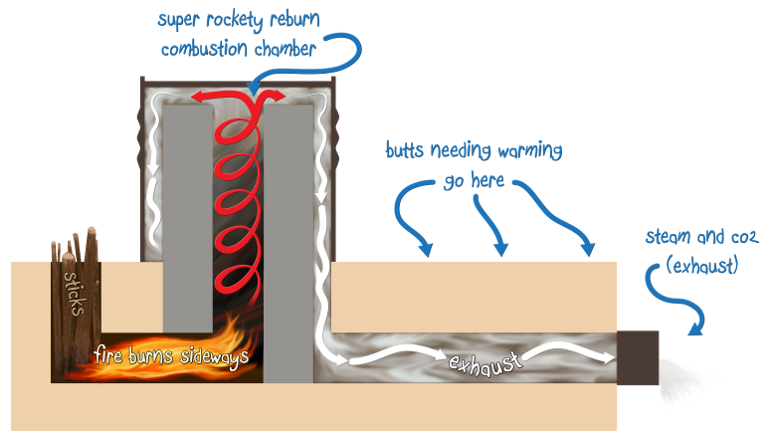
Imagine, if you will, a woodstove.  These usually consist of a combustion chamber (usually somewhat decorative), and a chimney that goes upwards, perhaps winding so as to distribute heat evenly in the upper levels of a home, and then exiting vertically from the roof.  The problem with this setup, even with more efficient models, is that it is rather wasteful.  The hot exhaust gas from the roof is a carrier of heat that could have been used in the home.  Further, the smoke that is usually generated represents not only pollution, but also impure combustion.  This post on garbage incineration discusses this issue as well.  Smoke contains, among other things, carbon monoxide and carbon particles, pollutants that could ignite under the proper conditions and concentrations.  For the record, I am not suggesting that the world will explode if everyone used woodstoves (though you can get chimney fires this way), I only intend to highlight the wasted combustible material.  Below I shall post the solution to this waste.  I usually try to avoid linking to non-public-domain sources [aka "Wikipedia"], but this page gives the best illustration of the physics involved that I could find.
Source.
The primary advantage to this setup, known as the rocket mass heater (RMH), is the "super rockety reburn combustion chamber."  It traps the ash and smoke in the same place as the heat of combustion, leading to the burning of the impure combustion products.  Not only does this generate cleaner exhaust, but there is no lost heat in the form of smoke.  The second benefit of this design is that the exhaust usually snakes through a large mass.  This is usually cob, but others have been made using sand and brick designs.  The larger this mass, which is often formed into a bench, the more heat can be captured from the exhaust.  The mass can then retain and radiate heat hours after combustion has stopped, keeping the heated space warm.  Of course, more efficient burning means less fuel is needed overall.  It would seem that many users report needing less than one cord of wood for a winter where they would usually burn 3-5 with a conventional woodstove.

Naturally, home heating is only one of many possible functions.  Greenhouses may be heated efficiently with such a design, and the picture leading this post shows a makeshift hot water heater.  Designs without the large mass and featuring a hole at the top of the combustion chamber are known as rocket stoves, and are a very efficient way of boiling water or cooking food.  On a personal level, I am very curious as to how burning switchgrass or biochar might work.

I have only scratched the surface of this topic, and it appears that it is a fairly new idea, given the size of the Wikipedia article on the topic.  However, I actively encourage you to seek out information on the topic, I am certain it could lead to a more sustainable future, and endless fun in the form of do-it-yourself projects.

NM

P.S. Thanks to my darling girlfriend, the brewer of the Turkish coffee that fueled this post.


Thursday, December 29, 2011

Sunflowers.

Sunflower.  Source.

So,

I have learned that a typical week for me involves at least one instance of surprise interest in a topic I had previously found mundane.  A week or so ago, this proved to be the sunflower.  I have not heavily researched this topic, but I stumbled across a few tidbits of information I hope we shall all find interesting.

One surprise to me was that the native sunflower of North America is a perennial species [comes up year after year], unlike the farmed varieties which may behave more like an annual [dies outright every winter].  As a result, considerable interest has been generated recently in producing a hybrid of the high-yield annuals with the perennial behaviour of the native varieties.  Since sunflower oil may be used as both a food product and a source for biodiesel, it would be wonderful to have a perennial oil crop.  Eliminating the fuel/energy requirements for planting such crops every year makes for a more sustainable future, and makes the farming process more efficient overall.  While I would prefer to see switchgrass used for fuel, I can certainly appreciate having a perennial food crop.

Graphical representation of sunflower floret placement.  Source.
While I have little to no understanding of the mathematical significance of such a thing, the way in which the florets/seeds of the sunflower arrange themselves is a form of the Fibonacci spiral and the periodic angle of placement is related to the golden ratio.  I have no idea why, but Wikipedia states that it is 55/144 of a circular angle, where 55 and 144 are Fibonacci numbers.  Huzzah, I suppose.  Regardless what it means, it certainly looks to be a very efficient spatial arrangement (no doubt perfected with a genetic algorithm), and is rather hypnotic.  I suppose that is just a fancy way of saying "Ain't it purdy?", but I stand by the statement nonetheless.

In what I thought was a startling application, sunflowers also have a documented propensity for scrubbing heavy metals from the soil.  Lead, arsenic, uranium and radioactive species caesium-137 and strontium-90 will collect in the seeds of the sunflower plant.  Scrubbing would likely be particularly easy with the planting of perennial sunflowers.  One would simply need to cut the seeds from the stem to isolate heavy metals from the soil.  In fact,  sunflower planting initiatives have been put in place in both Chernobyl and Fukushima to scrub the radioactive isotopes from the soil in the wake of nuclear material release.

So there you have a few quick, interesting facts about sunflowers.  My understanding (and thus, this post), is not at all well developed, but I invite you to read more on the topic yourself.  Surprisingly interesting for what seems to be a generic flower.

NM


Thursday, August 25, 2011

Garbage Incineration.

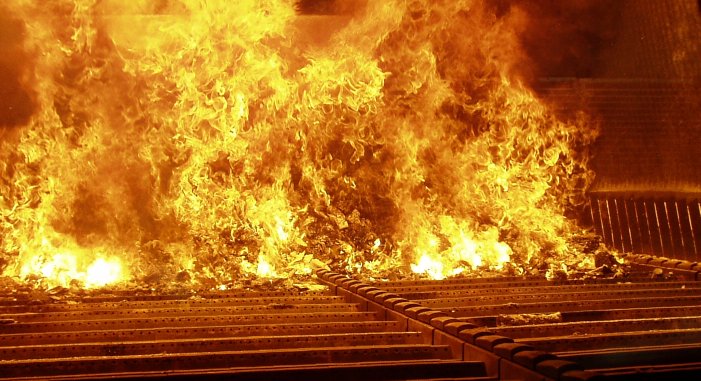
Municipal waste being incinerated.  Courtesy Wikipedia.
So,

It would seem that there is some kerfuffle in the Greater Toronto Area.  The ground has been broken on a garbage incinerator project, and the locals are certainly worked up about it.  While I will not pretend to be an expert on the subject, I do know some pertinent science that I am sure you, my monocled, Brandy-swirling readers would love to hear about.

I will freely admit that at first, burning garbage seems like a bad idea.  After all, many of us have thrown things onto a fire and seen the evolution of black pillars of foul-smelling smoke.  This, however, is far different from what goes on in a garbage incinerator.  You see, inside an incinerator, it is much easier to get up to high temperatures in an enclosed space than in an open fire pit.  Those of you who have used a chimney to ignite charcoal (or "cookin' biochar", as I am certain no one calls it) may be familiar with this effect.  The objective here is to achieve total combustion, where all carbon [or fuel, the garbage] is fully converted to carbon dioxide ["is fully oxidised"].  This is far better for our air than the results of impure combusion, which include much higher amounts of ash, soot [what I assume to be aerosolised/dispersed ash, really], and harmful products like carbon monoxide.  Fire pits see impure combustion when "smoky".  The combustion above appears to be very pure, by comparison.

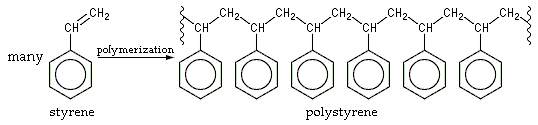
The structure and synthesis of polystyrene. Wikipedia.

I will also admit that, in many cases, garbage incineration is often accompanied by the abandonment of recycling plastics.  They are necessary to fuel the blaze, and are included with the garbage.  This, too, sounds like a nightmare to the environmentalist.  I agree that in a perfect world, all plastic would be recycled forever.  Sadly, this is either not the case, or not possible.  Some classes of plastics would be easy to recycle.  Styrofoam, polymerized styrene [or "polystyrene"] is an example.  This is easily dissolved in the solvent acetone.  Acetone also has a very, very low boiling point.  It would be very easy to dissolve all those meat trays and packing chips, then boil off the solvent to have relatively unscathed polystyrene to reuse.  Unfortunately, as with other classes of plastics (water bottles, especially), this is not the case.  The manufacturing process for these types of plastics is inexpensive enough that the recycled product is too expensive for anyone to purchase.

The other challenge facing plastic recycling is the nature of the substance.  As can be seen above, plastics [polymers] are very long chains of some individual molecule [the monomer].  The recycling process must heat plastic so that it can be reformed.  Heating damages the bonds of the polymer, causing the plastic to degrade.  In fact, the reason that one rarely sees 100% recycled plastic products is that the structural integrity of recycled plastic is compromised, and it must be blended with new plastic so that the product may serve its purpose.  For the record, recycled metal does not share this problem, and I think it a fabulous idea, given the environmental costs of smelting metal.  Metal is also easily recovered in the incineration process.

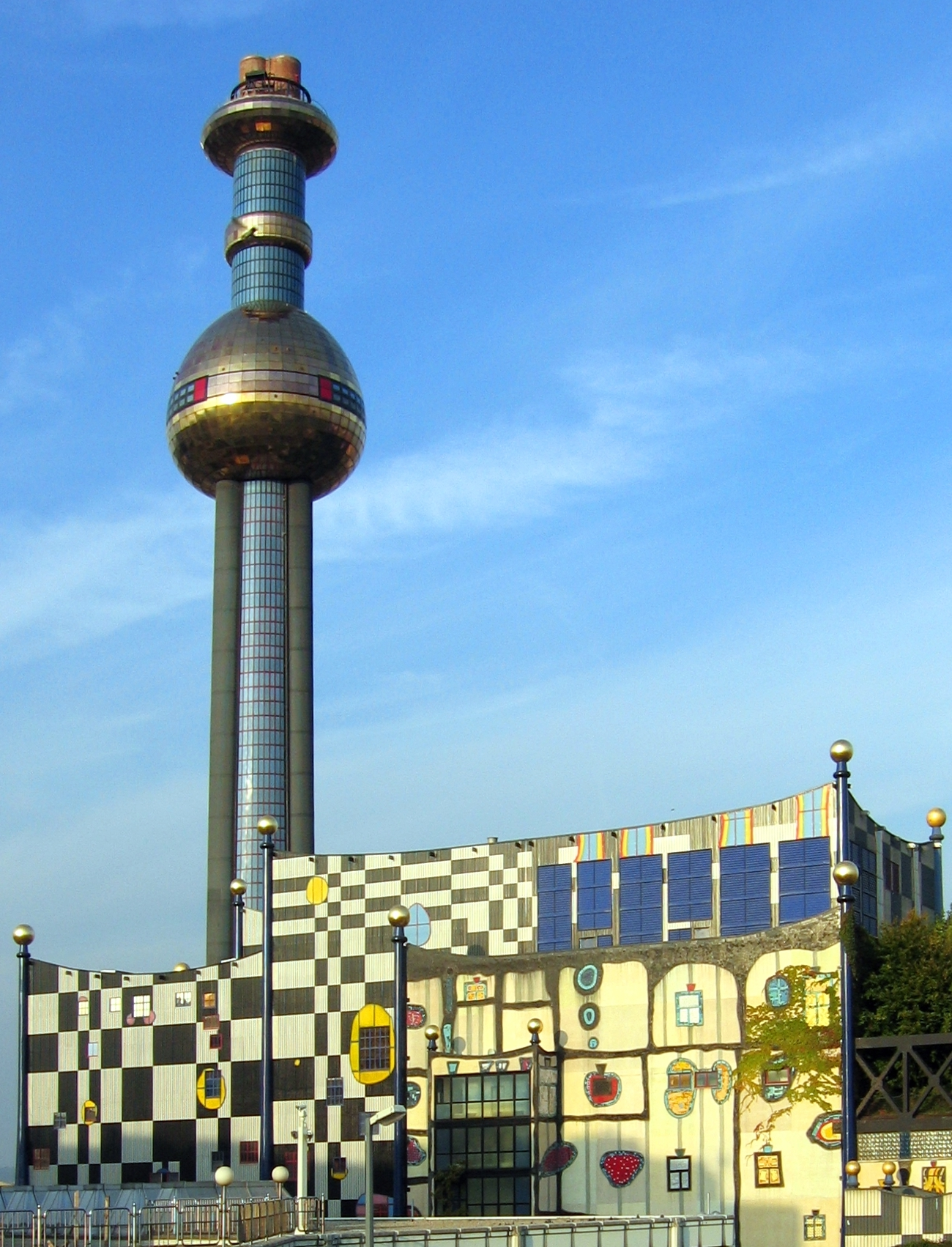
A garbage incinerator in Vienna.  Source.

"Now see here!" You may demand.  "Won't this contribute to global warming?  Spewing out all that carbon dioxide?!"  This is an excellent point, and I am glad that you [might have] raised it.  It is true that greenhouse gas emissions will be added to with garbage incineration, however, it is much better than other emissions associated with dumps.  You may have seen torches burning outside of buried garbage dumps.  I know that I have near Carp, Ontario.  The reason for this is the venting of methane, a common byproduct of garbage disposal.  A methane leak is far, far worse than the leaking of carbon dioxide into the atmosphere.  The reason can be explained with very simple physical chemistry and math (you may skip the next paragraph if you are truly averse to it, though I find it interesting).

The surface of the Earth is heated by the Sun.  As can be seen in math here, the light that an object emits depends on its temperature.  The very hot Sun emits all colours of the rainbow, but the Earth is by comparison only lukewarm.  Objects at that temperature emit infrared (IR) radiation (this is how night and thermal cameras work).  Normally, a substantial amount of heat from the Earth is converted into IR and is lost to space.  Molecules, however, will absorb IR and begin to vibrate, blocking the exit of the heat into space.  This is the cause of the greenhouse effect.  Now, not all molecules are created equally.  The amount of IR that a molecule can absorb depends on how many ways that molecule can vibrate, known as vibrational modes.  The number of vibrational modes of a molecule depend only on the number of atoms.  Carbon dioxide has three atoms, and linear molecules follow the formula 3N-5, meaning it has 4 modes of vibration.  Non-linear molecules have 3N-6 vibrational modes, giving methane, a 5 atom species, 9 modes of vibration (or something like that).  Other math which I do not wish to get into demonstrates that this makes methane 21 times worse to have in the atmosphere than carbon dioxide.

We must also consider the issue of storage.  Many municipalities are running out of space for garbage, and it is much easier to bury the remaining ash of an incinerator than it is for the immense volume it started as.  Also, while most modern dumps are more or less sealed, leaks of contaminants are not impossible.  Many contaminants released by the incineration process can be captured before discharge into the air, meaning that, in my opinion, it is likely safer to incinerate garbage than it is to simply bury it.
Power transmission lines, because I discuss it below, and this certainly is a large block of text.  Source.

I must also discuss the issue of power.  Conventional dumps may use the methane generated by the garbage to spin a turbine and generate power, which seems like a fantastic idea.  Energy from our waste. However, garbage incineration offers a much higher amount of energy to us.  The fire from the incinerator can be used to generate steam from a boiler.  This would spin a turbine in exactly the same way as nuclear, coal and natural gas power plants do, but from a power source we are currently wasting. In a twist on this idea, a company called Plasco has found that heating and exposure to a plasma torch can produce refined syngas (mentioned previously in my biofuels post), which can then be used to make various other products and fuels.  It is also worth noting that steam-generating applications can route waste heat to nearby schools and hospitals to heat hot water, boosting the overall efficiency of the process.

With this in mind, I feel that garbage incineration is beneficial, and ultimately an opportunity.  It would lead to safer disposal of our waste, which is inherently invaluable.  Further, it represents an untapped energy source which could ease strain on our grid, and provide baseline electricity generation which most renewable fuels cannot (as the sun does not always shine, nor does the wind always blow).  I think that, if done properly, widespread incineration efforts would lead to a better tomorrow.

NM

Sunday, July 24, 2011

Biochar.

Courtesy Wikipedia under GNU Licence Agreement

So,

An issue currently facing the scientific community is that of carbon capture and storage, CCS.  It is essentially trying to reverse what has been done over the course of a hundred-or-so years of burning fossil fuels.  Realistically speaking, storage is the easy part of CCS, in that there have been various proposals for very reasonable places to put captured carbon, including abandoned mines and the seafloor.  As an interesting aside, if one were to pump carbon dioxide to the bottom of the ocean, the pressure is so great that water molecules will align to form a "clathrate", a cage which will hold gases there indefinitely.  Carbon capture, however, has proven to be incredibly difficult and a challenge to the greatest minds of today.  Though I do not rank with those greatest minds, the subject of my honour's thesis was a theoretical study of carbon capture mechanisms using metal organic frameworks.  In case you were wondering, I studied copper II benzenetricarboxylate.  For now, these frameworks show great potential.  Unless some improvement is found, though, they will remain a terrible, terrible idea.  The problem here is that carbon dioxide is a very stable molecule, and is not all that easy to trap.

I hope to have at least conveyed that CCS is by no means a trivial problem.  That being said, I feel that a good solution may have been "discovered" recently.  I use parentheses because the technology is by no means new.  In fact many of you, while not adjusting your monocles and top hats, may have handled this technology.  You see, outside of the scientific world, this technology is known as "charcoal".  Biochar simply refers to charcoal when used for CCS and related purposes.  Please do not ask me why they couldn't call it charcoal.  Bioscientists go all goofy when they have the opportunity to name things.

I was recently introduced to this idea by a former environmental issues professor (he has a blog here).  Biochar has the potential to be an elegant solution to the problem of CCS.  Capture, the hardest part of CCS, is accomplished simply by growing woody or cellulosic biomass (trees, grass, what have you).  Storage is then rather easy, biochar may come in chunks, briquettes, full bricks, or even as a powder, but all that need be done is to bury it.  This scheme gives several advantages over other proposed methods.  For one, burying solids is very easy, especially when juxtaposed with methods proposing pumping carbon dioxide into abandoned mineshafts.  Other solids have been proposed, such as calcium carbonate.  The problem here is that while calcium carbonate (you know it as chalk and Tums' active ingredient), is a solid and very easy to deal with, simply burying it would affect soil pH, and widespread leaching could  be devastating.  Another benefit is that one would be burying carbon only, and not sacrificing an oxygen molecule for each carbon atom that must be stored, as would be the case with both carbonate or carbon dioxide storage.

In case you have furrowed your brow, wondering what the ecological effects of burying biochar would be, I believe I have an answer.  While I am by no means an expert, it is my opinion that no environmental harm would be done by burying this material.  My reason for this thinking is terra preta.  This term, which in Portugese means "black earth", refers to the enrichment of soil with biochar.  It would seem that infertile soil may be made fertile with the addition of biochar.  This effect may be noted to a depth of roughly two meters and is stable for timescales on the order of thousands of years.  It is an effect similar to that which switchgrass accomplishes with its extensive root system, but far more quick and direct.

A further benefit is that biochar is not difficult to produce.  It is the same process as charcoal, in fact, though perhaps with lower-grade feedstocks.  Plant matter is heated, causing it to give off water and syngas (carbon monoxide and hydrogen gas), the latter of which could be useful to heat subsequent batches of biochar.  The result is carbon (and potentially mineral) rich biochar.  I must admit, after learning of this, I became a little upset that my parents have been using a propane barbecue for years when charcoal is a far more sustainable technology.

Looking at this problem from a student's perspective, it all seems so simple and obvious a solution.  Biochar could be an excellent CCS solution, one which does not require teams of undergrads toiling away on computers, dreaming up theoretical mechanisms for accomplishing the same thing.  I suppose in an ideal world, switchgrass could be used not only for our heating and biofuel needs, but surplus could be set aside as biochar, which could sustainably reverse anthropogenic climate change.  Could the biochar even be redirected to fertilise our food crops?  The possibilities sure do seem endless.

Until such a time as biochar seems like a terrible idea, I shall continue to hope and dream that it will be widely adopted.

NM

Tuesday, July 19, 2011

Switchgrass.


So,

I mentioned in my Biofuels post that I had a preferred feedstock for production of biofuels.  After a fair chunk of research on the topic (it has been a topic I've followed for ~3 years), I firmly believe that switchgrass should be the primary feedstock for biofuel production in Canada and the United States.  In the interest of full disclosure, I will say that the reading I have done has not been based solely on peer-reviewed literature, though said reading has supported the facts I have read from non-scholarly sources.  I will also say that the Wikipedia article on switchgrass is an excellent starting point for learning more on the subject.

Switchgrass is native to North America, and can be found east of the Rockies, west of Nova Scotia and south of the Territories.  It is a primary constituent of the tallgrass prairie ecosystem.  This ecosystem is present where there is enough water to support more than a short grassland, but periodically sees all above-ground biomass destroyed.  Reasons for destruction usually include buffalo and fires.  As an interesting note, the indigenous peoples would often start fires for increased fruit production of berry plants, which in turn allowed for the tallgrass prairie to thrive.  This ecosystem has since been repressed by human activities.  We, as a civilisation tend to suppress wildfires and turn tallgrass prairie into farmland (it makes for excellent soil).  Virgin Ontario tallgrass prarie, or what is left of it, tends to be located on rocky or sloped lands which could not be tilled or built upon.

The reason switchgrass does well with periodic above-ground destruction is its biomass distribution.  Just over half of the biomass of a switchgrass plant is below-ground.  It is worth noting that growing switchgrass may be viewed as not only carbon neutral, but also a carbon sink.  Since more than half of the plant biomass is below ground, it may sequester and store the carbon dioxide released from the burning of fossil fuels.  One season of growing sees the switchgrass send up stalks and grow seed in the warm season (as of this post, most switchgrass I have seen has begun seed production).  In the cool season, the plant focuses on building up its root system.  Switchgrass can be mowed twice a growing season and still maintain a healthy root system.  The plant is also perennial, meaning it will return every spring indefinitely.  Experimental plots of switchgrass that were planted in the mid to late 1980s still exist today after one planting.

It is for this reason, among others, that the Resource Efficient Agriculture Program (REAP), advocates for switchgrass as a biofuel.  Recent success by REAP has been to advocate for grass pellets as opposed to wood pellets for stoves.  Though grass pellets do not burn as cleanly as wood pellets do (stoves must be modified for this), they are a more reliable source as wood pellets are made from industrial waste and are thus subject to economic forces.  REAP also outlines how to efficiently harvest switchgrass in Ontario and Quebec.  After a full growing season, the grass may be mowed and gathered into windrows to winter in the field.  This allows for snow melt to wash most of the nutrients back into the soil, decreasing fertilisation requirements.  This is largely the only input of resources required for a stand (or plot) of switchgrass, making it incredibly efficient.

Even with these low inputs, switchgrass may still thrive.  While first generation ethanol production requires corn, which in turn requires good agricultural land, switchgrass may be grown upon what is known as marginal cropland.  This means that the soil, for whatever reason, has become degraded and will not allow for food crop production, mitigating a food vs fuel economy.  Not only will it grow there, but the land eventually benefits from the presence of switchgrass.  Some individual stalks and their roots will eventually die, which means said roots will decompose underground.  This increases the organic content of the soil, which makes it higher quality.  It is for this reason that switchgrass has been used previously in soil conservation efforts, and why there is a large base of scholarly knowledge on the plant.

While I cannot remember the math that goes into this, various sources note that the energy requirements of the average Canadian home for one year can be provided by the production of a single acre of switchgrass in a season.  A hectare of land, 2.47 acres, will produce about 18.8 oven-dried tonnes of plant material in said season.  Since the switchgrass is only planted once over the lifetime of the stand and requires minimal energy inputs (fertilizers and such), the energy payoff is quite substantial.  If the switchgrass yielded is burned directly, it is estimated that the crop yields a 20:1 energy payoff, where first generation biofuels will break even only under the best of circumstances.  Conversion to second generation liquid biofuel will (theoretically) return a 5:1 energy payoff.  This figure is theoretical, as no one is yet certain what the predominant second generation production method will be.

Unfortunately, switchgrass does require some special treatment as a crop.  The crop requires three years to establish, and fertilizers must be avoided during this time (it encourages competition from weeds).  A stand must also be burned every 3-5 years in order to discourage competition from other plant life.  Remember, tallgrass prarie only thrived under periodic destruction, especially in the eastern half of North America.  It has also been noted that any monoculture is ecologically undesirable.  Honestly, these are legitimate problems, but I feel they are more than made up for by the benefits of the plant.  It is also worth noting that the monoculture may be mitigated by including other grasses from the tallgrass prairie ecosystem, particularly big bluestem.  However, it is a less robust plant.  Switchgrass is tolerant to floods, drought, and comparatively high salinity [salt concentration in soil].

I could go on about this, but the post as it stands is fairly cluttered.  I may return to this topic, and probably will should I run out of other talking points.  Be it known that I feel switchgrass would be an excellent feedstock for biofuel production.

NM

P.S.  The picture which begins this post was taken after I received a tip on the location of an experimental stand of switchgrass.  It seems the response of switchgrass is being measured against amounts of fertiliser used, which may explain the stripes of different colours.  I wonder what the results will be!
UA-57182519-1