Thursday, December 29, 2011

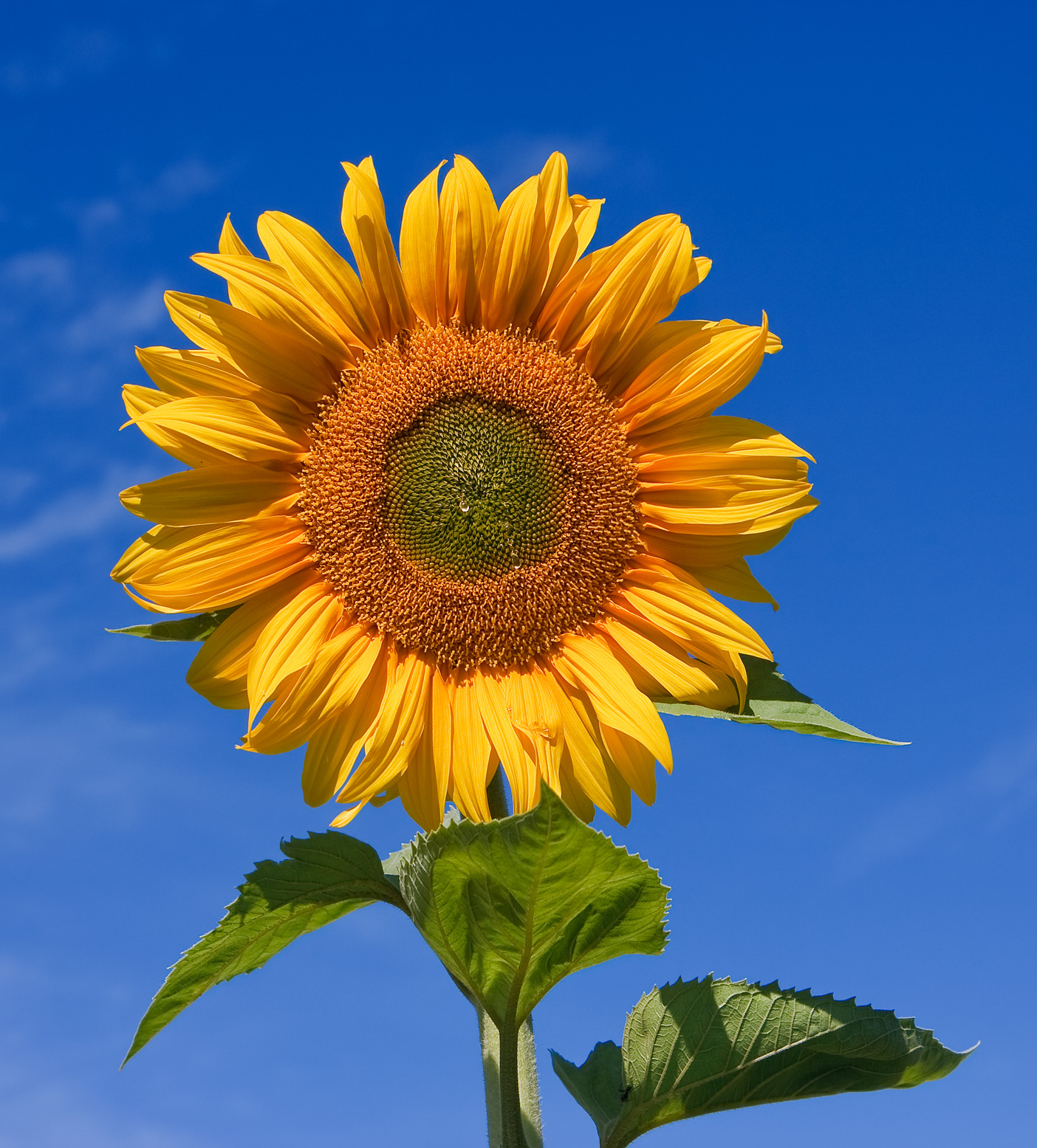
Sunflowers.

Sunflower.  Source.

So,

I have learned that a typical week for me involves at least one instance of surprise interest in a topic I had previously found mundane.  A week or so ago, this proved to be the sunflower.  I have not heavily researched this topic, but I stumbled across a few tidbits of information I hope we shall all find interesting.

One surprise to me was that the native sunflower of North America is a perennial species [comes up year after year], unlike the farmed varieties which may behave more like an annual [dies outright every winter].  As a result, considerable interest has been generated recently in producing a hybrid of the high-yield annuals with the perennial behaviour of the native varieties.  Since sunflower oil may be used as both a food product and a source for biodiesel, it would be wonderful to have a perennial oil crop.  Eliminating the fuel/energy requirements for planting such crops every year makes for a more sustainable future, and makes the farming process more efficient overall.  While I would prefer to see switchgrass used for fuel, I can certainly appreciate having a perennial food crop.

Graphical representation of sunflower floret placement.  Source.
While I have little to no understanding of the mathematical significance of such a thing, the way in which the florets/seeds of the sunflower arrange themselves is a form of the Fibonacci spiral and the periodic angle of placement is related to the golden ratio.  I have no idea why, but Wikipedia states that it is 55/144 of a circular angle, where 55 and 144 are Fibonacci numbers.  Huzzah, I suppose.  Regardless what it means, it certainly looks to be a very efficient spatial arrangement (no doubt perfected with a genetic algorithm), and is rather hypnotic.  I suppose that is just a fancy way of saying "Ain't it purdy?", but I stand by the statement nonetheless.

In what I thought was a startling application, sunflowers also have a documented propensity for scrubbing heavy metals from the soil.  Lead, arsenic, uranium and radioactive species caesium-137 and strontium-90 will collect in the seeds of the sunflower plant.  Scrubbing would likely be particularly easy with the planting of perennial sunflowers.  One would simply need to cut the seeds from the stem to isolate heavy metals from the soil.  In fact,  sunflower planting initiatives have been put in place in both Chernobyl and Fukushima to scrub the radioactive isotopes from the soil in the wake of nuclear material release.

So there you have a few quick, interesting facts about sunflowers.  My understanding (and thus, this post), is not at all well developed, but I invite you to read more on the topic yourself.  Surprisingly interesting for what seems to be a generic flower.

NM


Saturday, December 3, 2011

Cancer, and related progress.

Cisplatin, a drug used to treat cancer.
So,

Whilst my education concerns the physical sciences and not those of life, over the past few years I have been trying to follow developments in cancer research.  I am certain that most of my readers have seen the devastating effects of the disease.  It is as if the entire life of a friend or loved one drains from them before your eyes.  My reading on the subject is not exactly academic, and my understanding may be rather simplistic, but I would like to write what I know.  There is good news and bad news, so we will go over the bad news first.  As always, I invite feedback if I have made a mistake or had some oversight.

The bad news is that cancer is not a simple disease to fight, from a medical perspective.  As it turns out, "cancer" is sort of a blanket term referring to a mutation which causes uncontrolled replication of cells.  The problem is that cancer will attack various parts of the body at entirely different rates.  The other issue is the rate at which cancer spreads to different parts of the body, particularly the lymph nodes.  While my understanding of this is woefully limited, it would seem that the lymphoid system is a network that traverses the human body.  The nodes of the system are an excellent target from a cancer's point of view, as it allows for easy transport of cancerous cells to the rest of the body.  As a result, once a cancer reaches the lymphoid system, it is exceedingly hard to fight, and even harder to defeat.

To distill this information, to fight cancer medically is to fight many different diseases.  Many researchers do not believe there will ever be a definitive cure for cancer because it is such a varied disease.  Now, to understand the difficulty in curing the disease, I will recall an anecdote from my second year biochemistry course. Dr. Mezl told us that killing a virus/disease is simple.  If presented with a beaker full of harmful cells, one can douse it with corrosive chemicals and the problem will be solved.  The challenge of medicine is to selectively kill the offending cells while leaving the host unscathed.  The development of one silver bullet for such a varied disease is certainly a daunting task.

Recently, there have been some glimmers of hope.  Three patients with leukemia were given an experimental treatment in which their white blood cells were treated to make them aggressive hunters of cancerous cells.  Two patients were cured outright with the third having a 70% reduction in symptoms. The best part of the treatment is that the aggressive white cells remain in the body in case the cancer returns.  You, my non-spambot reader, may wonder how the white cells became hunter killers.  The researchers needed to insert genes which would make the white cells as aggressive as possible, and what do we know of which is notorious for such characteristics?  In what appears to me as a bizarre twist, the answer is HIV.  A virus known for ravaging the immune system can be utilized to hunt and kill a form of cancer.  Unfortunately for now, the treatment remains prohibitively expensive since the patient's own white cells must be treated, but it is a glimmer of hope.

In a separate, equally fascinating development, hot peppers may offer a general treatment for cancer.  My monocled, regular readers will recall capsaicin is the active ingredient in spicy food, so we know that the human body is capable of tolerating the chemical.  Now, the tests performed seem to be mainly in laboratory conditions, so we must be cautious of the results.  However, capsaicin appears to selectively attack the mitochondria of cancerous cells over healthy cells.  Therefore, at least in theory, it appears to fit the ideal characteristics of a cancer treatment.  Since the treatment does not appear to have been performed in actual humans, it may not work in the real world.  However, I am certain that lessons can be learned from this observation which could potentially lead to an outright cure.  It has also been noted that cancer rates are lower in countries where the diet is spicier (Southeast Asia, Central America), though I wonder if the life expectancy of said areas would affect the absolute rates.

So, the news is bleak at times, but there is also hope.  Finding a cure for cancer will not be an easy task for the researchers and doctors of the world, but things worth doing are rarely easy.  I am certain that humanity won't back down from the challenge, and that a cure will be found.  It will take time, dedication and co-ordinated effort, but it will be found.

Notes:
1) A paper dealing with capsaicin and cancerous cell death can be found here, though searching academic databases for "capsaicin" and "cancer" certainly return a lot of results.
2) If anyone with a background in life sciences notices mistakes, please let me know so that I may change this post for the better.


Wednesday, November 16, 2011

Movember, and Facial Hair.

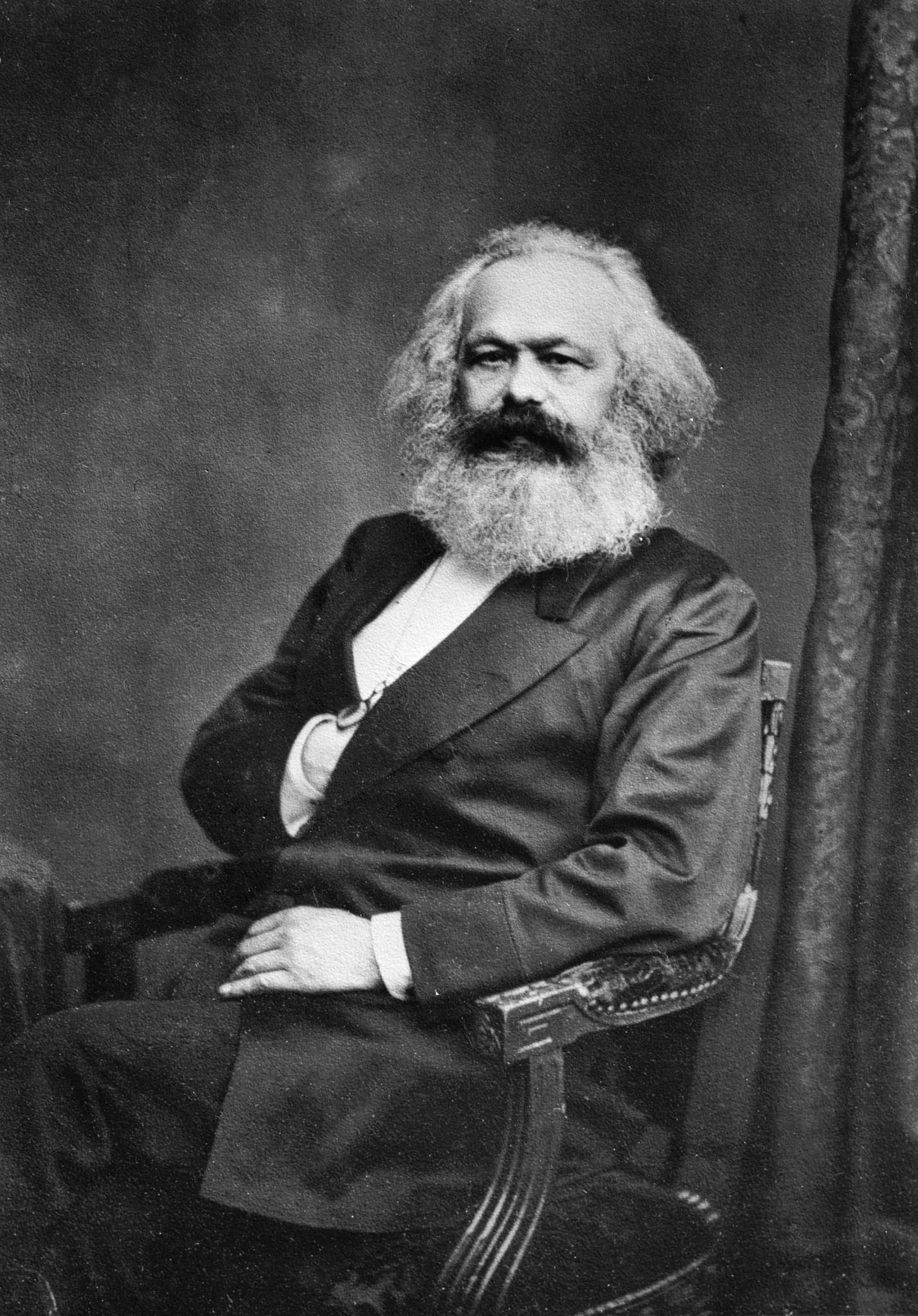
Karl Marx.  Political ideologies notwithstanding, the man had a remarkable beard.  Source.
So,

It is halfway through the month of "Movember", where men raise awareness (and funds via sponsorship), for prostate cancer by starting November 1st clean shaven, and then growing a moustache for the rest of the month.  My understanding is that this practise started in Australia, and became somewhat of a viral phenomenon.  I must say that it is an interesting way of raising awareness of a male-specific problem in a way that only men can.  However, I have realised that I have very strong (and somewhat irrational) feelings regarding the practise.  I wish to write as much to elicit responses as explore my own feelings on the matter.

<rant>

While I fully support raising funds and awareness for cancer research, I will say that my problem with this practise is that most men growing moustaches do so for the novelty of a moustache.  Very few men shave off a moustache or beard in order to participate, most are usually clean-shaven all the time.  In this way, the idea of facial hair is trivialised.  It is only to be paraded out when there is a need for it, whereas otherwise it is kept hidden and is considered a bother.

In the interest of full disclosure, I myself am a bearded-Canadian, and probably biased.  I decided after shaving my mutton chops three summers ago that:
1) I look silly and awkward without facial hair,
2) Not having facial hair when winter strikes is terrible, and
3) I would try my best to never be bald-faced again.
I will also note that my father has had a beard for the duration of my life and that my paternal grandfather would never be caught without a moustache.

Having said this, I have heard many a reason not to have a beard.  Men complain that a beard is itchy.  This is indeed true, but only for a period of roughly a week while growing a beard.  I personally call this the "itchy phase" (not academically verified, but universally supported when consulting with bearded men), and it is the reason that many men do not have a beard.  Women will also complain that a beard hurts their skin when kissing a partner.  Again this is true for shorter beard lengths, and is like any bodily hair in that short hairs are prickly/rigid, but longer hair is not.

Of course, my dearest monocled, non-spambot reader, you may wonder why women so frequently encounter stubble.  Psychology may have an answer, as outlined in Scientific American Mind on Sept. 23, 2011.  You see,  women are subconsciously drawn to men who can grow a beard.  The problem is that women also judge bearded men as aggressive, which is not a desirable quality in a child's caregiver.  Therefore, men with stubble are consistently rated as more desirable/attractive than their bearded and clean shaven brethren.  It would then logically follow that stubbly gentlemen are more likely to prickle women, and thus women are more averse to facial hair than is fair.

I will also state that in cold Canadian winters, a beard is of great utilitarian value.  Once the temperatures drop and the winds pick up, many people will wrap their face in a scarf.  Beards and other forms of facial hair accomplish the same thing without the need for external support.  My significant other noticed this phenomenon after touching my face when I had come inside after a very cold walk home.  Skin temperature is dramatically warmer under a beard than unprotected.

Paul Mara sporting a playoff beard with the New York Rangers.  Source.

Beards are also grown as "playoff beards" for fans of the sporting world.  A fan will grow a beard for the duration of a team's playoff run, and shave when the team either wins a title, or is eliminated from competition.  While reading an article on the practise (I cannot recall the name of the author), I read an interesting thesis.  The author claimed that the beard was the last bastion of masculinity in today's world, in that it was the only thing that a man could do that a woman could not.  While some women do indeed grow some facial hair, the growing of an entire beard by a woman is usually only accomplished after some sort of hormonal therapy after which the gender of the person in question is no longer technically female.

It is often speculated that the men of western civilisations are becoming neutered.  This is in fact the central premise of the television show "Man Up!", and is also the thesis of an increasing number of songs in popular culture.  I am not sure that it is a problem that men spend an increasing amount of money on cosmetics, or that they pay more attention to their appearance.  However, I feel that the discouragement of growing facial hair is roughly equivalent to demanding women bind their breasts so as to minimise the appearance of femininity.  It is a physical reality of the gender, and I do not think that significant effort should be expended in controlling either phenomena.

These things in mind, I keep a beard.  It is useful, and it is not something that all people, let alone all men can do.  To end this caffeine-fuelled case of mad typing, I will leave you with the attitude of my grandfather towards his moustache.  In the winter he kept a beard, but you would never see him without a moustache.  During the last hospitalisation of his life, my grandfather was kept in a coma.  In order to fit an oxygen mask properly on him, the nurses told him that they would be shaving his face.  When he heard this statement, he opened his eyes, and slowly and deliberately uttered the last words he would ever speak:

"Not the moustache."

</rant>

NM

Edit: -ed to include notes on psychology and stubble after the caffeine wore off.  I will also leave the following YouTube video for my bearded brothers:


Friday, November 4, 2011

Coffee.

A cup of coffee, served "black."  Source.
So,

I have long thought that I should write a post on my most beloved of beverages (but please don't tell Beer, Gin or Vodka, that's an awkward conversation I'm not ready to have), and, in typical fashion I have been bogged down thinking about how to properly explore it as a topic.  Whilst I may edit or otherwise reconstruct this post in the future, I shall dive in and attempt to share my interests.  I hope that you, my dearest, non-spambot reader will enjoy it all the same.

A brief aside: As always, my claims will be formally unsubstantiated, but I trust that a consultation with Google will either support or refute me.  If you do notice an error, please comment such that I will be able to remedy the situation as transparently as possible.

My historical knowledge of coffee is somewhat lacking, but I do recall a couple notes of interest.  It is said that coffee's rise was due in no small part to that of Islam.  While the consumption of alcohol was forbidden by the faith, coffee was seen as an acceptable substitute (must like cocaine-laden beverages were in the USA during prohibition).  In stark contrast, some European coffee-houses were banned in the 1600-1700s (universally in some countries), due to suspicions that they were used to conspire against the local monarchies.  For various reasons, a non-trivial contribution being the deliciousness of the beverage, I am certain, coffee persisted and became the beverage I know and love today.

The coffee plant persists only between the tropics of Cancer and Capricorn, an area which may be known as the "Coffee Belt".  The plant naturally grows largely in the shade of larger plants and on slopes, likely for drainage.  When you see coffee labelled as "organically shade-grown", this is to what they refer.  It is my understanding that this is the Arabica coffee which we drink.  The other variety, Robusta, was largely developed for the purposes of serving humanity's likely unhealthy dependence on the stuff.  Robusta coffee will grow in (on?) traditional cropland in full sun, but ultimately results in a poorer quality product.  At this point, I shall digress and recall a commercial for Nabob coffee.  The gentleman featured in the commercial detailed how much coffee was shade grown, how much was sustainable/fair trade/what-have-you, and said that of that shade grown/fair trade/what-have-you, Nabob beans accounted for only 10%.  He then smiled and asked that we make it 100%.  Terrible, I declare.  He should simply wish that sustainable/fair trade/what-have-you beans will become a larger share of total bean production, and potentially wish that Nabob will represent a larger portion of the aforementioned beans.  I cannot imagine why he would wish a monopoly on S/FT/WHY [interesting that "what have you" becomes WHY, I digress further] if he truly cared about sustainability.  But anyway...

The fruit of a coffee plant.  Source.
After the coffee has been grown, it must be roasted.  I am given to understand by an excellent comic by The Oatmeal on the subject that the green bean at the centre of the fruit will pop twice upon roasting.  The second popping of the bean indicates that it has finished roasting.  I assume it is at this point which "light" roast coffee beans are removed.  It is my understanding that the duration of roasting determines light v. dark classifications, as well as those in between.  It also determines the concentration of caffeine in the coffee beans.  Caffeine will undergo thermal degradation at roasting temperatures, so light roasts contain more caffeine than the dark counterparts.  Therefore, if one desires caffeine most from their coffee, one would chooses a light roast.  Alternatively, if flavour is paramount for a drinker, one would choose a dark roast (a wonderful example being the Continental from Second Cup).

Once the bean has been chosen, one must choose the grind and brewing method.  These go hand in hand, as the grind is determined by the time water will be in contact with the grinds.  In North America, we tend to use a grind labelled "coarse" and use a drip brewing method.  Here, water is heated to near its boiling point and dripped over coffee grounds housed in a basket.  The resultant extract of the coffee beans drips out the bottom of the basket and into a carafe.  The machine is relatively simple, requires little thought and, perhaps most importantly, is difficult to screw up.  This last feature is incredibly important when one considers that many of us are largely useless before the coffee has been brewed [in the interest of full disclosure, I am always vigilant in finding new and exciting ways to screw up the morning coffee].

The Bodum has enjoyed recent popularity, and is a method of coffee preparation utilizing a French press.  Freshly boiled water is poured over very coarsely ground coffee and kept there for several minutes within the cylindrical vessel.  Afterwards, a [metal grate] plunger is lowered which holds the grounds at the bottom, and allows the brewed coffee to be poured from the top.  I am told the finished product is rather nice, but I have never enjoyed coffee prepared with a French press.

An espresso maker with crema shown.  Source.

While the above two methods are really two ways of making brewed coffee, a slightly different product is espresso.  You will note this is not "expresso", but espresso.  I have often described this method as the end product of an engineer trying to make concentrated coffee.  It is as labour intensive as it is lovely.  One must use a very fine grind of coffee [the water is in contact with it for a very short time] and tamp it into a metal basket [using a tamp, able to press the grinds into the basket evenly].  YouTube videos recommending using roughly 30lbs of weight behind the tamp.  This basket is placed into a holder, which is then locked into the espresso machine.  In my personal machine, steam at ~15 atmospheres of pressure forces water into the basket, allowing the brewed espresso to flow through a pinhole at the bottom of the basket.  The shot is "pulled" for roughly 15-20 seconds before it is stopped.  At this point, the crema [with an accent so the e makes an "ay" sound] should be even, off-white and delightfully foamy. It is worth noting that espresso-ground coffee must either be purchased directly, or ground with a burr grinder.  A regular coffee grinder using a blade will not produce a fine enough particulate size for espresso.  A burr grinder is not unlike a mill stone with sharp burrs attached, and it may also be adjusted to allow for normal "coarse" grind coffee, or the very coarse grind required for French press brewing.  In a fun physics note, when grinding coffee to the finest of grinds, static charges result.  Then, when a very tired operator opens the vessel containing the grinds, they have a tendency of flying everywhere, the static forces easily overcoming gravity for small particles.

Naturally, with human beings consuming coffee the way we do, the health effects of ingesting this brew is continuously studied.  I shall not begin to speculate on all the potential benefits that have been preached, both because I feel I have not read enough into the possible decreased risk of Alzheimer's, prostate and other diseases.  Instead, I will touch on a few interesting notes which I have come across.  Regardless what health benefits one may be chasing [it is touted as having lots of antioxidants, among other things], one must be careful not to consume much more than three cups per day.  Too much caffeine will stress the human body, and ill health will result.  That being said, one may note that a lot of coffee is consumed by those who are thinking during work.  This is due to the fact that caffeine has been found to inhibit the chemical pathways which cause fatigue after mental exertion.  Not only that, but it has positive effects on physical performance as well.  In fact, Cracked has produced an article detailing the super powers bestowed upon mortals when they consume coffee.  Just try to keep it under three cups a day.

The benefits of consuming coffee lead me to wonder whether it is to us what Freud thought cocaine would be.  Freud was a large advocate of cocaine, thinking it a cure-all, and extolling other virtues.  I believe a couple were increasing chattiness and rosiness of the cheeks.  He only stopped when he saw how cocaine destroyed lives.  When working at a rather slow-paced job, I drank an awful lot of coffee. In some ways, I actually fit symptoms of drug dependent behaviour.  My sleep patterns suffered, and I was generally moody and irritable, likely a byproduct of stressing my system too much with caffeine.  Cutting down my consumption was difficult, but unlike with cocaine, my life was not at risk in doing so.  Maybe Freud was right, but he had the wrong substance.

It would seem that what was meant to be a brief discussion of coffee has become drawn out and rambling.  In any case, enjoy your coffee tomorrow.  I know I will.

NM
Wednesday, October 12, 2011

Improbable Research, and the Ig Nobel Prizes.

A pancake.  It will make sense later, trust me.  Source.
So,

The 2011 Ig Nobel Prizes have been awarded.  No, there is no affiliation with the far more prominent Nobel Prizes.  My interest in the Ig variant is the wedding of two things I love: science and humour.

When the Ig Nobel Prizes were established, they were defined as those experiments which "can not, or should not, be repeated."  This included experiments such as the one featured on the popular television show Myth Busters, that concluded a human swims equally well in water as it does in gelatin.  It turns out that the added resistance of gelatin both hinders forward movement is made up for by the resistance to the swimmer's stroke.  Fittingly, the current description of Ig Nobel winning research is that which first makes you laugh, but then makes you think.

To accompany the Ig Nobel prizes is a journal, the Annals of Improbable Research.  It provides an outlet for research gems to which I am occasionally directed.  A recent discovery of mine was this article which shows that, mathematically speaking, the State of Kansas is flatter than a pancake.  Of course, when presented with such knowledge I smile and chuckle to myself.  Then, as intended by the editors of the Annals, I think to myself how remarkable such a discovery is.  I am also reminded of a potentially unsubstantiated claim that, were a billiard ball the size of the Earth, its imperfections would be deeper than the Marianas Trench, and higher than Mount Everest.  I would imagine that this is a testament to the power of gravity, but am certainly not an expert on the subject.

Of course, in the midst of mildly hilarious research material, there is also that which raises more concerning issues.  One winner for literature is Alan Sokal for his paper "Transgressing the Boundaries: Towards a Transformative Hermeneutics of Quantum Gravity".  Sokal submitted the paper to the journal Social Text in an effort to show that it would publish anything that sounded good and supported the preconceptions of the editors.  The paper was written to be nonsensical with heavy usage of quotations from postmodern academics on topics of math and physics (i.e. not entirely accurate).  At the same time Transgressing the Boundaries was published, Sokal revealed to Lingua Franca that the entire article was a hoax, and its submission was meant to discredit Social Text on the basis of the latter publication's lack of intellectual rigor [fact checking].  The publication process is certainly an important part of modern academia, and shortcomings of this nature are important to catch and note.  Sokal just found a hilarious way of doing so, and I enjoyed reading about it.


I would encourage you to google the Ig Nobel prizes and take a look at past winners.  I hope you will smile, and then think.  I enjoy doing so, perhaps you will too.


NM
UA-57182519-1