Sunday, October 20, 2013

The Impressions of a Calgarian Summer

Onward!

So,

I haven't written anything in about half a year.  Or, rather, I haven't published anything in about half a year.  Can you even believe my nerve?  But I digress.  As ~98% of my readers will no doubt already know, I spent the summer in Calgary teaching children how to bike, meeting fantastic people, and generally exploring a region of Canada which I had never previously experienced.  In the true spirit of science and discovery, I feel it necessary to divide this post into headings, and perhaps sub-headings.

A [Surprisingly] Progressive Attitude:

It's kinda solar-power, just a really, really old kind.
The image of a prairie pumpjack might not be the best picture to start this heading, but hear me out.  It is my understanding that this image has become more or less commonplace since the discovery of large oil deposits in Alberta.  It's important though, because my understanding is that this energy production has given way to...

Source.

That's right.  There are now large wind farms coexisting with conventional farms all across Alberta, and it's my understanding that the province leads all of Canada in wind energy production.  This was one of the first instances in which Alberta surprised me.  In my home [and supposedly progressive] province of Ontario can't put up more than one windmill at a time without drawing the ire of baby boomers who are convinced that human civilization peaked between 1955 and 1965 and all subsequent change is an affront to God and Country.  Rural Albertans have recognized that wind energy is a great way to make some extra money, so they do it.  They don't complain about the view being ruined.  They don't invoke the most bizarre example of equivocation I have ever seen and say Alberta is "naturally green without windmills."  They just recognize a good idea, and they do it.

Speaking of good ideas...

Another good idea?  Bike lanes.  Lots of 'em.  Calgary currently has 960km of bike lanes, ~350 of which are on-street.  And, as with other bigger Canadian cities like Ottawa or Toronto, I feel safe riding my bike on the roads because drivers are familiar with the relevant laws and are acclimated to the presence of bicycles.  Again, this is in stark contrast to my home town, where being off-sidewalk is the worst kind of nuisance.  Further, I didn't even realise what a good idea segregated multi-use trails would be until I came to Calgary.  I just assumed I would always be slowed by joggers and walkers alike, but Calgary recognized a good idea, and then they did it.  They also have "park and ride" lots near the trails, so you can drive part way into the City, then use the trails to get into the downtown core without paying for parking or dealing with congestion.

I don't believe those bike lanes are fluke, either.  From talking with people, Mayor Nenshi is to be credited with a lot of related successes.  Downtown traffic congestion has been at least partially alleviated by an extensive cycling network, but also free C-Train [light rail] service in the downtown core.  I don't know that I would ever expect similar things happening in Ontario do to anti-change protests, but I'm sure glad to see that they can happen somewhere.  The City appears to take its motto rather seriously.

Come Hell or High Water:

Source.

For those unfamiliar with prairie geography, it's pretty flat.  Also, rivers run through that flat land.  The result of this is flood plains, regions in which even the tiniest increase in flow will represent a very large flooding footprint.  As it happens, Calgary is located in a flood plain at the confluence of the Bow and Elbow Rivers.  Some regions of Alberta are even named for their predisposition towards flooding (I'm looking at you, High River).  So, when the peak flow of the Bow River in 2005 was a hair under 800 cubic metres per second, one could expect rather unfortunate consequences when the peak flow reaches 1,740 cubic metres per second (for comparison's sake, Niagara Falls sees typical flow rates around 1,834).  In fact, it results in the second most devastating disaster in Canadian history (after the 1998 Ice Storms in Eastern Ontario and Quebec).

When I first arrived in Calgary and went to my temporary apartment residence, I found it strange that the lobby was located on the first floor, the next 7 floors were parking, laundry was above that, and the residential floors only started after that.  Also, while walking down to 17th St SW, I noticed some apartment buildings appearing to be fully on stilts.  Why, I wondered, were all the apartment buildings so weird?  As it turns out, Calgary floods sometimes, and it's best not to have important things on the ground floor when it does.

As a point of interest, while I was evacuating it was interesting how eerily quiet the normally bustling downtown area was.  It was also interesting to see the number of people mounting bicycles to leave the area, likely while they went to stay with friends in the [elevated] suburbs.  The city's emergency shelters actually saw much less than projected use due to families and friends housing evacuees.  I suppose that's something Canadians are good at, though.  I'm sure residents of Gander, NL will tell you as much.

To its credit, Alberta has recognised that flood plains are not a great place to build important things, and have since passed laws making it more difficult to develop floodplains for residential use.  I bet someone thought that would be a good idea, so naturally, they did it.


Closeted Pyromania:

No one will actually tell you this, because nobody seems to notice.  I, however, am here to tell you that Calgarians are a bunch of closeted pyromaniacs.

Canada Day, 2013.
I've been to the most insane of Canada Day celebrations, having lived in Ottawa for five years, give or take.  We had fireworks, we had massive celebrations on Parliament Hill, we drank more than what most doctors will tell you is a good idea.  But never did anyone say "Y'know, maybe our buildings should spew some fire for this occasion..."  And, when I went to see the Stampede's Grand Stand:


I'll take this opportunity to say that the only reason I managed to take this photo was that fireballs spewed forth at regular intervals such that I finally managed to catch an outburst.  There were, of course, several more after this set.  And, not far from where this was taken, you will find the Scotiabank Saddledome.  When the home team scores, there is a large bic-style lighter that will spew flames, because one of the sponsors is a natural gas company.

I suppose what I'm trying to say here is that when the NHL's former Atlanta Flames found a new home in Calgary, I'm not surprised they didn't change the name.

How to Make Friends and/or Enemies:

To quickly make friends:
- Wait until someone references Edmonton, then say "More like Dead-monton, am I right?"
- Wear a Stampeders jersey.
- Go to a bar and watch a hockey game.
- [This tip applies during Stampede in Calgary, or anytime in BC] Stand outside and wait to encounter someone.

To quickly make enemies:
- "Oh, me?  I'm from Toronto!"
- Loudly proclaim "You know, I think at worst the National Energy Program was a necessary evil."
- Trash-talk Mayor Nenshi.  I'm not sure why you would, but it's theoretically possible.

Within An Hour or Two's Drive:

Westward:
The Three Sisters in Canmore, AB.  You're just outside Banff at this point, too.  Source.

Lake Moraine, probably the most beautiful spot I have been.

Heading up into the Rockies, into the land of lodgepole pines and glacier fields, you will find Banff National Park.  It is the first of Canada's National Parks, too.  It is the first place that caused someone to sit down and say "This place is so beautiful that we need to protect it."  The resulting town of Banff, AB is an interesting place, too.  The city was created so that tourists would have something to do when they came to visit (tourist dollars were necessary to fund the CP Railway's construction).  Banff wasn't a pre-existing small town that eventually became a tourist trap, it was literally born that way.  The park is beautiful though.  That's really all I can say about it.

Now, if you were to head East...

Horseshoe Canyon and the Badlands.

Hoodoos, a large, dense capstone on top of bentonite clay columns.

Former coal mining country, the badlands of Alberta.  It makes for gorgeous geography.  It also makes for easy paleontology, this area is rich in fossils, and they just fall out of the side of those hills as they erode away.  Dinosaur Provincial Park is nearby, as is the Royal Tyrrell Museum.  It's the polar opposite of the mountains and Banff, in my opinion.  The mountains are quite elevated and usually chilly as a result.  The badlands and hoodoos are very dry and hot, home to cacti and prairie grasses as opposed to the trees and horsetails of Banff.

A fantastic note for me was that, no matter where you were in this range, my asthma symptoms more or less disappeared.  It was the first time since being diagnosed that I could easily forget my medication or even that I had asthma.  I am acutely aware of this fact now that I am living in Southwestern Ontario, and it makes me want to sing a song.

And it's all Big Sky Country.  Sorry, Montana.
Things That Threw Me Off:

One thing that immediately threw me was that many Calgarians will say "Hey?" in place of "eh?"  Several times after hearing "hey" while chatting with someone, I stopped to figure out what I was doing that would cause such an outburst.  Turns out they just say it.

Also, cheese curd.  I met exactly one person who seemed to understand the concept of what squeaky cheese curd was (Nicole, you're my hero).  So many people calling curds "squeaky cheese" when the curd didn't squeak.  As someone born in Eastern Ontario, it was not unlike the Twilight Zone.  Everything was more or less normal, except nobody understood cheese curd.  Weird.  They also don't bag their milk, and find the concept weird and scary.

Another different note was that Western Canada appears to be missing the Southern Ontario style angry tension that pervades whenever one is out of the house.  It's odd and hard to describe, but I think it's summed up nicely by a recent study which divided the United States into three distinct psychological regions.  "Temperamental and Uninhibited," "Friendly and Conventional," and "Relaxed and Creative," are the three regions and are more or less exactly where you'd expect them to be.  Southern Ontario, I suspect, experiences much of the temperamental and uninhibited psychology, while "friendly and conventional" would dominate in Alberta.

In Summation:

Calgary specifically and Alberta in general was fantastic.  My work at bike camp was amazing thanks entirely to the quality of my coworkers' collective characters.  I saw majestic landscapes, I met amazing people, I had fantastic experiences, I was there for a natural disaster, and I would definitely go back.  Fortunately, having a degree in chemistry should facilitate such ambitions.

They seriously need to work on getting Tag No. 5 vodka out there, though.

NM

Monday, June 3, 2013

The Last Month Or So.

The Centre Block of the Parliament of Canada.  Lots... lots of stuff going on  there and thereabouts. Source.

So,

I've certainly not been blogging for a while.  I was laid off from my job as the mining industry went through at least a brief period of tanking, I've moved to Calgary to be a bike instructor, and will start graduate studies in electrochemistry in the Fall, but in London, Ontario.  Also, as has been the case in the past, I checked on my pageviews after an extended absence, and found that the blog had seen a period of increased activity.  I have and will continue to assume this occurs because my loyal, be-monocled and top-hatted readers are frequently checking back to see if there is anything new, and perhaps re-reading my older posts on such fascinating topics as burning garbage or perhaps Bev Oda and why I was exasperated with the government about a year ago.

Well, about that.  Robocalls are still in the news, and not quite resolved, though if I am not mistaken it was deemed to be either the Tories or someone with access to the list kept by the Tories of voters not intending to vote for them.  Voter suppression did indeed happen, but was deemed not to affect the outcome for the ridings in question.  

Other than that, however, is what really hit the fan in the last month.  We'll pause here and remember that the Tories wanted to reform the Senate, making it fully elected and with fixed terms for Senators.  Stephen Harper also promised to never make a Senate appointment.  Honestly, I would forgive him of this.  It was pointed out to me as a second year university student in a history class, that Senate reform, and thus ammendments to the Constitution, are really, really hard to make.  It requires a nationwide referendum which can divide families, and are an exceeding amount of work for all parties involved.  I also suspect this had something to do with a challenge Harper issued to then Leader of the Opposition Stéphane Dion.  I forget what the legislation in question was, but Harper said that if Dion had a problem with it, he should instruct his Senate-majority to refuse to pass the Bill in question.  Well, it happened, and Harper was forced to compromise on some legislation.

Then along came Patrick Brazeau, Pamela Wallin and Mike Duffy.  I find it slightly amusing that "Conservative Senator" was such a popular career move for members of the CTV News team.  But yes.  These three Senators, along with a Grit, I seem to remember, made some key mistakes on claiming housing allowances.  It was accepted that if one's primary residence was more than 100km away from Ottawa, Senators could claim a housing allowance.  Well, claim they did and, I would argue, rightly so.  Though it later came to light that the claims made by these Senators were improper, rebutted with the statement that the form in question was ambiguous on the definition of "primary residence".  In any case, a report has been issued that used particularly damning language in the cases of Wallin and Brazeau, but curiously soft on Duffy, given that they were all guilty of the same thing.  It was also revealed that it was the Conservative members of the committee that held up the report until the language in Duffy's case was softened.

Further curiosity in the case of Mike Duffy was that Nigel Wright, the now former-chief of staff for the Prime Minsiter, gave Duffy a cheque for ~$90,000 to cover the ill-claimed housing expenses which were to be repaid.  The issue here was that if it was a gift, Duffy needed to report it, and if it wasn't, Nigel Wright needed to report it.  In the days following the revelation of the cheque, Tory MPs defended it as the "honourable thing to do."  This of course means that the phrase must have been included in the talking points each MP receives daily.  I'm not joking, to be clear.  However, Wright was then included in a long and storied tradition of the new Conservative Party of Canada, and was promptly thrown under the bus.

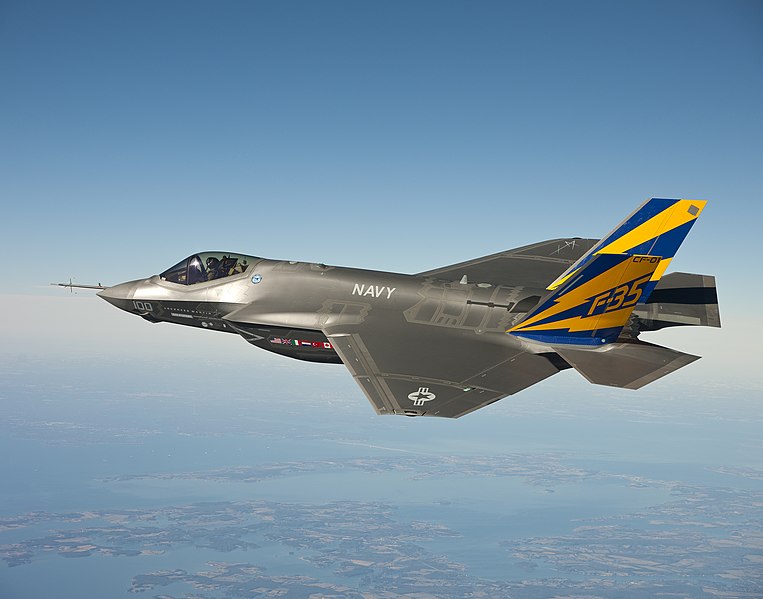
The sad thing is that I'm not surprised.  Before the Tories achieved a majority government, the first election saw creative accounting, and the next saw robocalls from the pseudonymous Pierre Poutine.  We have also been lied to about the true cost of the F-35s.  Ah, yes, the F-35s.

Still Scandalicious.

In the end, to discover the true costs of the F-35s, it took reports from the Parliamentary Budget Officer (PBO) and the Auditor General.  The PBO, you'll recall, was installed to make government more accountable when the new Tories first came to power.  Then, when the PBO set about doing his job and finding out what was actually in the latest budget, he was dismissed.  That's right, the last Government budget was so obscure that the PBO set about finding out what exactly they were to spend money on, and was dismissed for his efforts.  This includes the advertisements for Canada's Economic Action Plan, which has basically stopped spending money with the exception of its own advertisements.  Seriously, the last EAP commercial I saw advertised Canada's rich natural resources, as if we hadn't had an economy heavily reliant upon them since we started trading beaver pelts.  And, when the Tories were found to be in contempt of Parliament and subsequently defeated in a non-confidence motion, it was dismissed as a "Parliamentary trick" by Stephen Harper, who used the same trick to defeat Paul Martin's government.

Another issue I've wanted to touch on was the National Round Table on Environment and Economics.  This was in place from 1988 to 2013 (it was axed in 2012 and given one more year).  It worked to research how corporations and governments could work together for sustainable development.  In 2012, it gave one too many recommendations for a carbon tax.  It is the opinion of the Tories that Canadians have repeatedly rejected the idea of a carbon tax, and thus, the NRTEE is full of big smelly-heads and shouldn't receive any more funding.  You'll recall I'm a fan of evidence-based practices.  You'll also recall that evidence-based practices exist because popular opinion isn't always right.  In fact, that's part of the reason we have science, because intuition isn't always right.  But, naturally, if you disagree with the government, you can expect to get axed.

That reminds me.  I hope somebody from the CBC reads this, because their funding is getting slashed, too.  I expect it might have something to do with the fact that their reporting might be critical of the Tories.  Now, it's a common criticism of the CBC that it is hard on the Tories, but honestly, we are living in a time where the National Post is heavily criticising the government.  The National Post.  Yes, the National Post.  The newspaper set up by Conrad Black to give a nationwide voice to conservatism in Canada.  That National Post is running articles almost daily which eviscerate the Conservative Party.  Think about that.

So what do I make of all this?  It suggests to me that there exists in the current government a general disrespect and/or disregard for ethics, accountability and transparency.  The very things that the new Conservative Party of Canada campaigned on.  It suggests a politics of convenience rather than of ideology. It is an excellent example of realpolitik.

NM

P.S. To my friends from high school, I hear your groans.  To all, please comment if I have over-generalized or made glaring errors.

P.P.S.  Scott Feschuk has a humourous examination of the current situation here, not unlike Jon Stewart's famous Bush v. Bush debate.

Sunday, February 10, 2013

Svalbard.

Ominous, right?  Source.
So,

The picture above is the entrance to the Svalbard facility.  Think about that for a moment.  It's got the name "Svalbard", and it's clearly located in the side of a frozen mountain.  Let's first discuss what it is not.  It's not the lair of a supervillian.  It's not a fortress of solitude for a superhero.  It's not a multi-billionaire's pet project known informally as "Fort Kick-Ass."  It's not the location of a secret doomsday machine (and even if it were, the whole point of a doomsday machine is lost if you keep it a secret).

No, it is none of the aforementioned things.  Let's take a look inside and see if that gives any clues:
Not terribly ominous, but nonetheless puzzling.  Source.

What is being stored [~130m] in the side of a Norwegian mountain?  Seeds!  Many, many hundreds of thousands of agriculture seeds.  I read about this a year or two ago, I've retained the details of what I read, but not most of the sources, unfortunately.  A great place to start is the TED talk given by Cary Fowler, if you'd like to learn more about it.

Now, why on Earth are we storing seeds here?  Well, you no doubt remember my post on genetic algorithms, but allow me the indulgence of briefly touching on some points here.  Life as we know it is ultimately the product of a grand genetic algorithm, different organisms with different genes competing and co-operating, with the "fittest" surviving to pass on their genes to the next generation.  Now, how does this grand system evaluate the fitness of different species, let alone individuals of a species?  Varieties of pressures exist, plant diversity is often determined by the availability of water and how cold or hot a specific locale gets.  Pressures like this can wipe out or encourage different species.  Fun fact: barley as we know it today is a product of the human harvest of wheat.  Selective pressures which we used to breed good wheat crops also bred usable barley out of the wild varieties that existed.

It could be argued that while these pressures effect* the diversity we see on Earth, a much greater determinant would be mass extinction events.  We are familiar with the end of the dinosaurs which, it was recently [probably] confirmed, was caused by an asteroid impact.  A lesser known but far more devastating extinction event was the Ordovician-Silurian extinction event.  It is hypothesized that a supernova in a nearby arm of the Milky Way created a gamma ray burst which decimated our ozone layer, leaving Earth vulnerable to the UVC rays from our Sun.  This decimated over half of marine life [I have no idea if there was land life at this point, as I didn't look very hard for information].  We are currently living in an extinction period known as the anthropocene in which the natural extinction rate has been accelerated by a factor between 100 and 1000 times.

So things go extinct, this much we have established.  It is the species and thus genetic code that make it through these extinction events that by luck or by adaptation serve as the genetic diversity for the next round of genetic contestants.  In crops [and even humans], diseases, parasites and pests can affect populations much the same way, eliminating vulnerable populations and leaving resistant populations which will hopefully go on to produce another generation of disease/pest-resistant populations.  This effect can be seen when using herbicides in crops.  There is a joke in the field [field?  See what I did there?] that it's easy to find out which weeds are herbicide-resistant, you spray the herbicide in question and see which weeds survive.  The same is true of antibacterial-resistant "superbugs".  You treat people with antibacterial drugs, and the superbugs are left to wreak havoc, C. difficile being an excellent example.

Now, from this we see that genetic diversity can be key to a population surviving some sort of extinction event, at least for the species [and I'm sure I'm butchering this terminology, I apologize whole heartedly].  If you're at all familiar with our current agricultural practices, you might have alarm bells going off in your head. We, as a civilization, tend to grow large monocultures of clones.  You've no doubt heard of the potato famine in Ireland.  The potatoes in Ireland were largely identical species, as only so many were brought over from the New World.  Potato fields were populated of clones, and the genetic diversity was relatively low.  A blight that affected that one variety of potato had an extremely large population at its mercy.  So much so that large numbers of Irish people either died or set sail for America, some of my ancestors among them.

This is why agriculturally useful seeds are being stored at Svalbard.  Various seed banks exist around the world, but they are vulnerable to human conflict and natural disasters.  Banks in Afghanistan and Iraq were recently lost, and are prime examples of why we should store our seeds far away from people.  Svalbard, ideally, should refrigerate itself (it is in and/or around the Arctic Circle), is far enough away from people to avoid conflict, but is reasonably accessible by air.  Most, if not all countries of the world have deposited seeds to the vault, which will be made available to the depositors upon request.

A long time ago (I remember the point of the story, but not the details), a cataloger was wandering through the countryside, taking samples of agriculturally useful seeds.  He came across a family's strain of wheat, and described it as some of the saddest and most pathetic wheat he had ever come across.  Nevertheless, he took samples, and they were deposited and recorded.  A few year ago, the global wheat crop experienced a major disease outbreak (because we planted a large monoculture, as we are wont to do).  Populations were devastated, and costs of bread [leavened and otherwise] increased as a result.  Immediately, efforts went into breeding a new strain of wheat which would be resistant to this new disease.  Where did they find resistance?  You, my monocled, top-hatted, and attractive reader, guessed it.  That pathetic wheat the cataloger had stashed away.  Genetic diversity is key to the survival of the crops we rely on, and it must be preserved if we are to make it in a changing climate.

NM

P.S.  I believe there is a similar effort to Svalbard known as the Millennium Seed Bank in UK.  They not only store agriculturally significant seeds, but also those of threatened (or just regular) plant species.

P.P.S.  Will I ever decide between regular and square brackets?  Keep reading to find out!

Saturday, February 2, 2013

[Old MacDonald Had a Farm] EROEI

An explosion from nuclear test Operation Upshot-Knothole.  Simon, to be specific.  Source.

So,

You have my apologies for the delay in exploration of fascinating [read: "mildly interesting"], topics.  It would seem between a laptop dying and a lack of night shifts, I don't have the large of chunks of time to properly discuss [read: "write until I get bored"] the issues which I feel you, dear monocled reader, deserve to know about.

The topic of this post is EROEI, an acronym for Energy Return on Energy Invested, also known as EREI, but if you have the extra O, it ends up being more like the Old MacDonald song.  In either case, I believe that our future prosperity as a species hinges upon our ability to effectively utilize renewable and sustainable energy sources, for reasons I will get into later.  That being the case, we need to consider EROEI when evaluating energy sources to determine their viability.

For some context, let's think about oil.  Since the first "gusher" was discovered in Texas, we have gradually been tapping all the easy oil we have been able to find.  After a while, there were no gushers left and we had to work to get the oil out of the ground.  This has continued ad absurdum because we have built an infrastructure for ourselves that runs on oil.  Those first gushers received their name for a reason.  For the equivalent energy of one barrel of oil (just above 6GJ of energy, 42 US Gallons), 100 barrels were gathered.  So we put a little energy in, and got it back one hundredfold.  In 1970, the efficiency of oil imports to the US represented an EROEI of roughly 40.  By the late aughts, it was closer to ten.  The oil from the Canadian tar sands can be extracted for an EROEI of roughly three.

This means that the efficiency of oil has decreased significantly for us.  We have gone from getting energy back one hundredfold for our efforts, down to about three times in northern Alberta.  This actually represents my biggest issue with oil going forward.  We have plenty of oil reserves from which we could draw for decades to come, but the problem is that we are approaching a point where the EROEI for oil will reach 1, and decline from there.  This would mean that it wouldn't actually be worth our time getting oil out of the ground, because the work we perform to extract the oil would be greater than the energy in the oil we extracted.

To attempt to put this in perspective, I'll talk about first generation biofuels (I provide this link knowing full well that you, my dearest top hatted reader, remember the post vividly).  In order to make ethanol out of corn in Canada, the EROEI represents between about 0.8 and 1, if I recall correctly.  That means that if you consider all the energy the farmer/factory worker spent in gas and fertilizers to grow, harvest, then convert the corn to ethanol, we would have been further ahead to just burn the gas directly and skip the ethanol fiasco.  Naturally, the legislation surrounding first-generation biofuels is really intended as a stepping stone to get to second generation biofuels, which will have an EROEI well in excess of 1, and probably greater than that of the tar sands.
You've been reading a while now, so here's a picture.  It's not switchgrass, but it sure is nifty.

In my article on switchgrass [my favourite biofuel candidate], I point out that the EROEI for growing and then burning switchgrass is roughly 20 [though I wasn't aware of the concept at the time].  For growing, converting to liquid biofuel and then burning, the EROEI is hypothetically around 5.  To put that into context, that means that in terms of energy, we would be further ahead making biofuels out of switchgrass than getting into the tar sands debacle.  Simply growing and burning switchgrass for heating purposes puts the tar sands to shame, and makes a mockery of home heating oil [in terms of energy, of course].  Why don't we do this?  Sure beats me, I assume it's some combination of an unwillingness to invest in new technology (and changing existing infrastructure), and distorted economics due to government subsidization of the oil industry.

Now, I assume at this point your are adjusting your monocle and top hat, and saying "I'm sure enjoying this talk of ratios, but could there be broad, global implications from falling EROEI?"  I'm glad you asked, dear reader.  Historians have hypothesized that a contributing factor to the downfall of the Roman Empire was falling EROEI.  The Romans, as it turns out, were not terribly good at soil conservation.  As time went on, the amount of food that Roman crops produced declined with the quality of the soil.  I am quoting a friend Paul on this, but I am told that great tracts of fertile land were reduced to desert, land which has never recovered.  Naturally, there were economic consequences to this, and the Empire declined and fell*.

It has also been pointed out that energy prices (which are somewhat reflective of EROEI in absence of ridiculous market forces), are intimately related to economic strength.  Every time there has been a sudden spike in the price of oil, an economic downturn has followed.  With falling EROEI of oil, I don't believe it's unreasonable to expect economic consequences from our continual dependence on oil.

At this point, I'm sure you're wondering what some good alternatives would be.  While nuclear explosions yield a fantastic EROEI (the picture at the top WAS related after all!), current nuclear reactors can offer an EROEI of roughly 10 and thorium reactors of the future (maybe a post-worthy topic), could yield 50.  What about wind and solar?  Well, wind offers an EROEI of 18, and solar 6.8 [though focused research is aiming to improve that figure].  I'll point out here that EROEI for wind and solar refers to the energy generated over the lifetime of the equipment divided by the energy required to manufacture the equipment.  You'll notice that even though these figures are low, they're all higher than the 3 we get from the tar sands.  That being said, it sure would be nice if we still had a sustainable power source which yielded an EROEI of 100.

Wait, hold on, there's something about that figure that's familiar...

Ah, yes.  We have an energy source like that.  It's hydroelectricity.

NM

* - No, I'm not saying that this is the only reason that Rome fell, but I'm saying it was likely a contributing factor.  The same work producing a smaller product is bound to have consequences on that grand a scale.

P.S.  This turned out pretty messy, I'll maybe edit this later.  Hope you got this far and/or enjoyed it!

Sunday, November 4, 2012

Under-Utilizing Resoures, and the Paradox of Thrift [EBP 3].

Cryptic, yes, but read on.  Source.
So,

My posts often fall into one of two categories: there's something I've learned about and wish to inform/discuss with others, or something that irritates me and I want to rant.  I suppose this post will be a partial mix of the two.

It's hard to say exactly what is happening in the economy right now.  There are constantly indicators which look promising (and Canada's Government makes great strides to ensure you know this), but at the same time we face persistently high rates of unemployment, with the 18-35 demographic particularly hard-hit.  I personally found myself unemployed for the entirety of last year (though for four months, I was a part-time student), and was particularly discouraged when I could not even get a call-back for a job loading and unloading trucks.  Luckily, I found a job.  It's round-the-clock shift work, but I have a steady paycheque, and that puts me way ahead of most of my peers.  That said, shift work is certainly not my ideal career end-game, and I work with a lot of people who are not chemists by education.  I don't want to work there forever and ever, but with the job market the way it is, I can't fathom leaving.

The job market is currently a tough place to find yourself in, and most economic indicators still put us in "challenging" territory.  You'll also hear a lot of corporations and government talking about belt-tightening, reigning in budgets and taking austerity measures [exactly what the first two terms meant, but it sounds fancier].  However, and feel free to correct me, this appears to be the exact opposite of what everyone should be doing.

After gaining a casual interest in economics, I have come across the concept of the Paradox of Thrift.  You see, times are tough, and our base instinct is to save money.  We put off buying that shiny new tech item, new vehicles, and men's undergarments [I'm not kidding, it's an important economic indicator].  So people throw money away into savings accounts, fearing a rainy day.  Corporations too, will keep large sums of money, fearing the worst.  Governments which spent heavily on stimulus cut back on spending in an attempt to balance budgets.  It all seems perfectly reasonable, and it is helping no-one.  After all, saving money only keeps it out of circulation.

When considering the general population, saving seems a little more understandable.  These are individuals, and in challenging economic times it seems reasonable that jobs could be lost and with it, one's entire revenue stream.  It also seems reasonable with corporations, though the problems become more pronounced.  The Guardian has published an article which is very much par for the course when reading about corporate wealth in 2012.  Corporations are currently sitting on historic* amounts of cash.  Some of this is being paid out to investors in the form of dividends.  Unfortunately, since most people invest in companies as a form of savings and not income, this money doesn't end up in circulation.

[* - I have no idea if this figure is historic, I think I heard this used at one point, though it may have been exaggerated or misremembered in my own mind.]

So what does this leave us with?  Governments spent, and are still spending, large sums of money in hopes to kick-start the economy. In my post on Government stimulus, I gave an example of how Government spending can mitigate downward economic trends and help recovery.  I have since learned that this can be somewhat compounded by the Keynesian concept of the multiplier.  When the Government injects cash into an economy by way of spending on public works, the workers now have money which is spent on goods and services, mostly locally.  Those secondary beneficiaries of Government spending are then free to spend more, creating tertiary beneficiaries of the stimulus, and so on.  Keynes [or rather, his protege Kahn, I think], originally estimated that in Great Britain, at the height of the Great Depression, each dollar of government spending would represent two in circulation because increased monetary circulation.

So corporations have benefitted from government stimuli, and are reaping in large amounts of cash.  Now, normally one might assume that the corporations could then invest that money in hiring new employees, who then have money to spend.  This is the way to recovery, and the current reality may be the reason the global economy is still sluggish.

Having just recently graduated, I can see the effects of this corporate stinginess first hand.  I know both people with what I would regard as a more general skill-set [Arts majors who are then qualified to work in almost any business environment], and those with very specialized skill-sets [STEM jobs, Science, Technology, Engineering, Math].  These people, all of them, are capable of generating vast amounts of wealth with their expertise.  This may be through their unique skill sets, their dedication [evidenced by a Bachelor's degree] and work ethic, or all of the above.

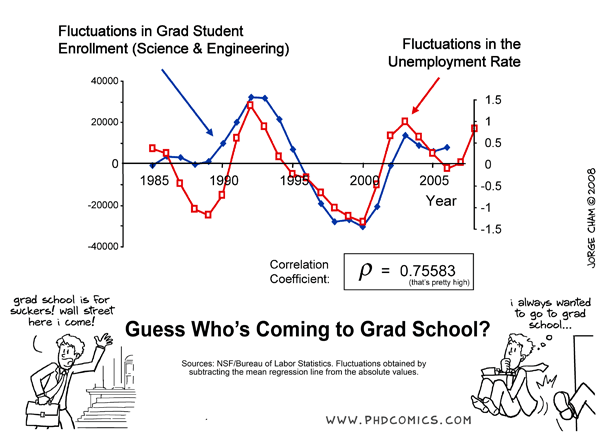
So where are these potential wealth generators?  I know, and have heard of, advanced degree holders working at Denny's and Lululemon.  I know a receptionist.  I know several people who are unemployed outright.  I know others who have retreated back into graduate school in order to earn a paycheque [and it's a trend, see this comic]:
As an aside, this is a really excellent comic strip.


When I see this happen, I see an under-utilization of our nation's resources.  These people are ready, willing, and able to do more.  These people are capable of generating new wealth for the private sector. These people can balance troubled government budgets with increased personal and corporate tax revenue.  By sitting on these vast piles of cash, corporations are causing the very uncertainty they are trying to protect themselves against.

NM

P.S.  "Code Red" by Delhi 2 Dublin was an excellent song to listen to while writing that final paragraph.
UA-57182519-1